
Your customer should dictate how you do a lot of things. Don't think that you have the answers so much as you have the questions to ask your customers. And that's gonna determine a lot of things about about everything you do. That's maybe the more simpler of the big truths.
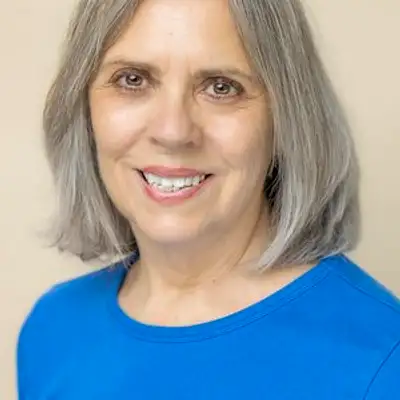
Joan Kaup:At Flywheel Social Enterprise Hub, through a multi week training program, social impact focused founders learn from one another, their coaches, and the subject matter experts that share their knowledge and experience with a cohort. My name is Joan Kaup. I am the host of On the Fly!. And today I am talking with Joe Vallo, one of Flywheel's subject matter experts. Joe excels at the intersection of finances and how it affects and is affected by the company's strategy, operations, and technology.
Joan Kaup:Hello, Joe, and thank you for joining us on On the Fly!
Joe Vallo:Morning, Joe. It's a pleasure to be here.
Joan Kaup:Thank you for all the hours and years you have dedicated and shared with your knowledge with the Flywheel founders. It's been a valued
Joe Vallo:It's always been fun. I think it's been ten years now.
Joan Kaup:Is that right? Yeah. So let's just get right into it, shall we? Begin at the beginning. Tell us about your background and how you came to be where you are today in the professional consulting capacity.
Joe Vallo:Yeah. Well, after I graduated from college, I actually took a job with the predecessor of Macy's. And I realized quickly retail wasn't my thing. So I went back to school, got my MBA, which was a general business course. From there, I got directly into consulting with what used to be the big eight firms.
Joe Vallo:Now I think there are four of them. But one was Arthur Andersen and then another was Pricewaterhouse, just now PricewaterhouseCoopers. So I did that for a combined eleven years, something like that. And those were big corporate operations or IT kinds of projects. So that's where I learned a lot about business operations, how to manage businesses, how to manage projects, and that kind of a thing.
Joe Vallo:But the travel was terrible, living in numerous other cities and not much of a home life. So I left there and I helped to start a couple of companies. And that's where I really got immersed in what it takes to be an entrepreneur, what it takes to get a company off the ground, the iterations you go through as you start up a business, you develop a business plan, a business model, and those kind of things. And you find out pretty quickly most of the time that that's not going to work, so you change it all. So you learn through those iterations.
Joe Vallo:So I did that for a number of years, climbed to the level of a chief operating officer, so I managed a lot of different functions inside a company. So that was a great training ground. And then that that kind of ran its course and I got out of there. And I, by accident, got back into consulting again as an independent consultant. So I've been doing that for about ten years now.
Joe Vallo:And at that time, was switching into consulting work. I got connected with Bill Tucker who used to be the executive director of Flywheel. And he says, hey, you want to be a coach? And I said, well, that sounds like fun. Let's give it a shot.
Joe Vallo:And so it's it's gone from there.
Joan Kaup:Oh, good. You often talk about the holistic chain of entrepreneurship. And that probably comes from your experience of starting your own businesses and going through different iterations. You talk that you can't just isolate the money, that the finances intertwine with every nook and cranny of creating, launching, and sustaining a company or organization. So tell us more about that.
Joe Vallo:Well, you said that eloquently. A lot of entrepreneurs are afraid of talking about money and looking at it closely in relation to how they're going to run their business. So one of the things that I often say is when you're trying to develop a financial model, don't worry so much about the numbers. Worry about the operation. And so a financial model is really just an operational model with numbers on it.
Joe Vallo:And so you have to get into the details, for example, of how you're going to price your product. But before you can figure out how you're going to price it, you have to decide, first of all, who's that target customer and what can they afford, what would they think is a good value. And then with regard to your product, you have to decide what's the unit of sale. Am I selling one unit? Am I selling six packs?
Joe Vallo:Am I selling cases? Or if I have a service, am I selling hours? Or am I selling project basis? And you have to go through all those decisions. And that's about how you operate.
Joe Vallo:And then once you've made those decisions, now you can apply numbers to those things. And then you can start putting that model together that's going to tell you how much revenue are you going to generate, what's it going to cost to create those products, to sell those products, do all those things. So again, it's all about the operation and the details of of the the clarity of the picture of that operation. And then you just start putting numbers to it.
Joan Kaup:Well, and then you learn too once you are in the marketplace that the consumer doesn't want to buy it by the hour. They want to buy it by the project.
Joe Vallo:That's right.
Joan Kaup:So then you have to go back and do some more erasing and more figuring. Right?
Joe Vallo:That's right. You you go through that iterative process. You you think you have a a good plan at first. And then you test it with somebody, and you realize, well, that's not going to work so well. They really don't want it that way.
Joe Vallo:So then you come up with the next iteration of the model, and you try it that way.
Joan Kaup:And I can only imagine that the plan that you go back and forth with before you officially launch isn't really chipped in granite either. I mean, it changes as the company matures.
Joe Vallo:It does. Exactly. You learn from your experience, and you figure out what works and what doesn't.
Joan Kaup:So think about this. What would be a fundamental truth that founders need to realize, respect, and practice right from the jump street?
Joe Vallo:Maybe the biggest one is that your your customer should dictate how you do a lot of things. So don't think that you have the answers so much as you have the questions to ask your customers. And that's going to determine a lot of things about everything you do. Maybe maybe the more simpler of the big truth.
Joan Kaup:It's interesting coming from a numbers guy, a finance guy, the power of communication and marketing.
Joe Vallo:Well, yes. Yes. And I'm not a trained I'm not an accountant. I'm not a CPA. But I have an aptitude for numbers.
Joe Vallo:And what I learned is a lot of leaders don't consider the numbers side of it. And since it sort of suited me, I became pretty good at it. And I provided a lot of value in in my understanding of how numbers make the difference and understanding what you can do, what you should do, how did you do, you know, what were the results, did you hit your goals, all those kinds of things. It's all about numbers ultimate.
Joan Kaup:Well, knowing that you have been a coach and working with Flywheel and Flywheel Founders for ten years, you have given a lot of expertise to a lot of folks. I know you as a very kind and wise person.
Joe Vallo:That's nice of you to say that.
Joan Kaup:And the Flywheel founders are being very honest and vulnerable when they're working with their coaches and subject matter experts, when they open their hearts and their books to share with us. So what are the immediate red flags or things that you notice when you examine a company's financials or business plan or their first spreadsheet? What gives you cause for concern? What is something you see and you go, uh-oh.
Joe Vallo:There are a couple of things. And they're not I mean, you could consider them red flags, but let's just call them steps in development. And so when I first get introduced to somebody, learn about where they think they're going. And quite often they talk about a particular product or service that they think is the greatest thing in the world. And then you say, that's pretty cool.
Joe Vallo:How are you going to sell that? Well, we're still working on that exactly. And so there are a lot of details that are left out. So they're focused on the product. They're not focused on the operation, the delivery, the service, how they'll interact with customers, or who their customer is.
Joe Vallo:Who's their target customer segment? And that's really the biggest starting point. And that goes back to what I was saying previously. It's about the customer. You ask them, so who specifically do you want to buy this product?
Joe Vallo:And they say, well, I think almost everybody will. Well, everybody won't. And even if they did, you can't afford to sell it to everybody because you can't afford to the sales channels to reach everybody. You have to figure out how to afford to reach one particular segment of the market. And so if you haven't focused on that, then you don't know a lot about your product.
Joe Vallo:You don't know a lot about your operation. And so you have to you have to go back to the drawing board, so to speak, and and work out those details.
Joan Kaup:And so is that how you help them overcome their shortcomings? You just keep sounds like you just keep asking them questions.
Joe Vallo:That's that's a big part of it. Yes. You ask those questions, and you just say, well, you you gotta figure this out. Are you gonna hire a Salesforce? Are you gonna contract with a sales, organization?
Joe Vallo:Are you going to sell direct to retail? Are to you be a wholesaler? Are you going to have a physical presence? Are you going to sell online? All these different questions that they have to get their arms around before they can understand work through the whole process of that operational model then the financial model so that you can go to investors and you know how much money you're going to ask for.
Joe Vallo:And we're talking very high level things here. This is not details. This is not minutiae. How much money do you need to get this off the ground for the next two years? Much of your own money you're going to have to put into it?
Joe Vallo:How much are you going to ask of your friends and families to make this work? And if you don't have those answers of what that takes, then you can't get that money. People aren't going to have confidence in you. So you can't get the money you need to get it going. So it just comes down to the basics of how are you going to run this and how are you going to fund it.
Joan Kaup:Well, and you say it's high level. It's not minutiae, but it's based on minutiae. Because they're gonna ask you, how did you figure out the cost for this? How does the cost, what is your profit margin on this? I mean, there's lots of questions based on that detailed minutiae, if you will, in order to get you to a high level conversation when you're in front of an angel investor.
Joan Kaup:So I appreciate that whole stair step. Like you said, it's holistic. You cannot isolate the numbers.
Joe Vallo:Right. Exactly.
Joan Kaup:So with over the course of ten years, I can only imagine how many different founders you've talked with. Is there any particular conversation or scenario that has left you with a smile or left you with a memory that you're comfortable sharing?
Joe Vallo:What leaves the biggest impression on me is the passion that these founders have for the product or the service that they're about to create or that they're already creating. And the results that they get over time is very gratifying. So you don't expect it's going to be great initially. Yeah, sometimes there's a chuckle at where they think they are and you know that's not really where they are. And what they think they're going to do isn't going to get them where they want to go.
Joe Vallo:But that's a natural part of the process. You just don't know what you don't know until you start diving in and see what works.
Joan Kaup:Yeah. Passion is a very common element in social enterprise. And we are lucky as coaches and subject matter experts. I think we're very lucky to rub up next to that and absorb it because it's almost contagious. And having said how it is contagious and we get up next close to it, Flywheel operated during after COVID.
Joan Kaup:So during COVID, we did everything on online. We still worked with our founders. We just had to do it more through the computer screen than sitting next to one another. Do you have a preference of working with somebody online or working with somebody in person? Or does it not really make a difference?
Joe Vallo:They both work. One or the other is better in different scenarios. So if you're going to sit around and do a lot of brainstorming, I think it's great to do that in person. You've got a whiteboard or something like that and you can start jotting things down. I tend to be a visual person, so writing it out or illustrating something somehow is really good.
Joe Vallo:But I've done a lot of workshops by Zoom also and they can work really well. And if you've got a group of people who they may not be geographically close to each other, so Zoom is great. And if it's more of a presentation than it is a brainstorming session, then a virtual session works great. So you have done both.
Joan Kaup:When you're putting together a team to work or consult with a founder, what is the talent you're looking for? How do you build a team?
Joe Vallo:Yeah. When I've done workshops online and and it's if the workshop is going to be focused on a particular challenge that that a founder has, I I spend a fair amount of time talking with them first to understand first their business in general, but then specifically what is this challenge that they'd like to address. And I might find this more of a marketing related thing or a target customer definition kind of a thing. Or if it's a nonprofit, they say, I'm struggling with working with my board. That's a very general type of thing.
Joe Vallo:But I learn what that challenge is. And then I to I seek out a coach who has that particular business expertise. For example, you have a lot of expertise in marketing and I've pulled you into a lot of a couple of workshops when that was the challenge. Or if someone is struggling with their board and it's a nonprofit, then I'll go to somebody who has been on boards. And so they understand that environment that this founder is dealing with, that kind of a thing.
Joe Vallo:So I look for someone with particular expertise. Have they been a CFO? They have financial background. Have they been a VP of marketing? They have marketing background.
Joe Vallo:Have they been involved in product development at Procter and Gamble or something like that, some other consumer products organization? Then I'm going to try to bring that person in and we're going to talk about how do you formulate this product better, how do you define it better, how do you identify the value for the customer, that kind of a thing.
Joan Kaup:So you have worked with social impact for profit businesses and nonprofit organizations. Do you approach the finances and the strength of their finances differently if they're one or the other?
Joe Vallo:Not a lot. No? They're not different. And you know, a nonprofit is financially is not that different from a for profit. They just don't need to make as much profit, but they need to at least break even.
Joe Vallo:Now the sources of the revenues can be different. So a nonprofit probably is going to have a section or a segment of their revenues that are either from foundations in the form of grants or from donors, just private donations, that kind of a thing. So the source of the revenue might be different, but a nonprofit often has a non excuse me, an earned revenue stream as well. Well, earned revenue is what a business is too. So there are a of similarities.
Joe Vallo:And in both for profit or nonprofit, you have to the leaders have to be good financial managers. You have to be good at budgeting. You have to be good at monitoring your results against that budget, all those kinds of things.
Joan Kaup:So Joe, thank you for all of this. What else did you want to share with our listeners that I didn't I didn't ask?
Joe Vallo:Coaching has been a great experience. And Flywheel is a great organization to do it with. And so there's a lot of value being provided to founders out there. The coaches are also getting a lot of value out of this. It's a very gratifying experience.
Joe Vallo:And that gratification comes from seeing entrepreneurs create something from nothing, from next to nothing. So I would encourage people with business experience who think it's pretty cool that entrepreneurs are out there, they have a passion, and they want to create something new and special. I would encourage those business leaders to get involved as coaches. It's a lot of fun.
Joe Vallo:You get a lot of satisfaction from it. If you are somebody who has been a business leader and you have an opinion and you'd like to express that, being a coach is a great place to do that. Because these founders, they want to hear those ideas. They think they have a lot of ideas, but they're not perfect.
Joe Vallo:They're not always well formed. So there's a lot you can provide. And and so I would encourage you to to do that. And to investors, would say there is a lot of value coming out of Flywheel. We do need donors to the organization.
Joe Vallo:There's a lot of value to helping social enterprises get off the ground. So consider it seriously.
Joan Kaup:Thank you so much. Thank you for sharing your thoughts, your time, your insights, and your experience and expertise with all of our founders.
Joe Vallo:It's been my pleasure, Joan. Thanks.
Joan Kaup:On the Fly! is produced by Joey Scarillo with music composed by Ben Hammer. Recorded at 1819 Innovation Hub in Cincinnati, Ohio, courtesy of the University of Cincinnati.