The tech helps us scale, helps us to move quickly, helps us to keep track of our data, helps us to deliver on our promise of reliability. But the people, that's what creates the magic. That's what helps us to make sure that people are getting fed, make sure that this dumb problem of food's being wasted, yet people are hungry. And this is good food. This is healthy food.
Eileen MacDermott Budo:This is food that you and I would eat, just not sellable. Yesterday, it was good enough to for Kroger to sell it, and today, it's not. It it it's it's not available for the next day. You know? So all of this food is very, very good and healthy, and we don't wanna throw it away.
Eileen MacDermott Budo:We wanna get it to people.
Joan Kaup:While often seen as negative, failure can actually be a powerful catalyst for growth and success. Sometimes failing is the way you learn which strategies don't work or validate ideas that do. At Flywheel Social Enterprise Hub, we know that sometimes failing is a crucial step on the path to success. And that was truly the case for Last Mile Food Rescue, a beloved social impact nonprofit established in Cincinnati. Hello.
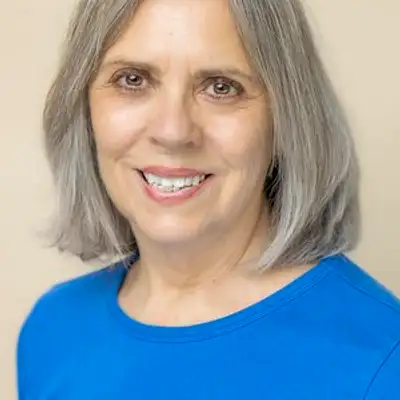
Joan Kaup:My name is Joan Kaup, host of On the Fly! Today, it is my pleasure to talk with Aileen McDermott Boudeau, who is CEO of Last Mile Food Rescue. She's agreed to tell the story of the ups and downs of getting this concept off the ground. The concept, the idea, the central core of last mile food rescue is the simple belief that good food belongs to people, not landfills. She's here to explain that to us.
Joan Kaup:Eileen is passionate about driving change and solving tough challenges. She employs smart strategy, teamwork, and collaboration to do that. Aileen left Procter and Gamble after many years as a senior director. And before that, she was with the Air Force for six years. She brings all that experience and analytical expertise to her role at Last Mile Food Rescue.
Joan Kaup:Eileen, thank you for your service with the air force, and thank you for joining us. Welcome to On the Fly!
Eileen MacDermott Budo:Joan, it's so great to be with you today. Thank you very much for having me.
Joan Kaup:I love how our paths connect and reconnect and overlap in the most, enjoyable ways in this city, so it's good to be with you. Absolutely. Let's just jump right into the central core of this situation. Last Mile Food Rescue is based on the belief that good food belongs to people, not landfills. Educate us about food and landfills.
Eileen MacDermott Budo:Absolutely happy to do that. Did you know that 40% of the food we produce in The US gets tossed into landfills? It's just an incredible, incredible statistic. And yet we have so many people that are facing food insecurity. About one in five people in Greater Cincinnati go hungry.
Eileen MacDermott Budo:That's about two hundred and seventy thousand people in Cincinnati alone. So for me, this is really kind of a dumb problem when you think about it because it's both an environmental and a social crisis. So food rotting in landfills, it produces methane gas, which is a really, really powerful, powerful potent greenhouse gas. And, you know, we've got this food shortage. So, really, it's not it's not that we don't have enough food.
Eileen MacDermott Budo:It's that we've got this transportation problem. When you put these two things together, rescuing just 25% of the food that's being wasted is really all that we need to solve this problem of food insecurity. So at Last Mile, we believe good food belongs to people, not landfills. So we put these two together and solve the problem with our with our solution, which is called Last Mile Food Rescue. We've got an app.
Eileen MacDermott Budo:You know? Like, that's the answer in the end. We've got this app, and we bring people to the problem.
Joan Kaup:As long as you mention the app, tell our listeners all the many ways they can find more about your mission, being a volunteer, your programs. Where are you on this big worldwide web?
Eileen MacDermott Budo:Sure. So we're we're, of course, in all the places that you'd expect to find us. You can look for us on on our website, thelastmilefood.org. You can find us on Instagram, on Facebook, on LinkedIn. You can download our app, which is Last Mile Food Rescue on any of your app stores.
Eileen MacDermott Budo:But let me tell you how it works. You know, essentially, we're matching food donors with volunteer drivers. And, you know, it this is such a such a wonderful volunteer experience where, you know, there's food that's out there. It's available for people to pick it up, and they're bringing it directly to those that need it. It's quick, safe, efficient, and, you know, it's a solution that anybody or a volunteer experience that anyone can get involved in.
Joan Kaup:I often have told friends that Last Mile Food Rescue is like the Uber of food rescue. They they use the app. Here you come. You pick up the food, and there it goes to the rightful place. So I've always enjoyed that.
Joan Kaup:You've done a little bit better job describing it. I wanna back up, if you don't mind. I've been a certified coach for Flywheel for many, many years. I remember when Tom Fernandez first brought the food rescue idea to one of Flywheel's cohorts. He had a different partner at that time, and it was a rocky, bumpy situation.
Joan Kaup:But he persevered, and Tom's relentless. Eventually, he connects with the right partners, and things went from rocky to rocket ship. Do you mind telling us that story?
Eileen MacDermott Budo:Sure. You know, so Tom is a colleague of mine from Procter and Gamble, so I've known Tom for a really long time. And, I was not his original partner. I was still working at P&G when he started Last Mile. And originally, the idea was a social enterprise.
Eileen MacDermott Budo:The the idea was that, you know, food that's wasted for companies that are wasting it, there's value. There's tax advantages that can be obtained by having someone rescue this food and then applying for tax savings, and there was a a sharing scheme that he had developed. But, you know, the concept of food rescue isn't new. People have been saving food and bringing it to the church basement pantry for years and years and years. So the idea didn't necessarily take off.
Eileen MacDermott Budo:But then what happened was a woman by the name of Julie Schiffman kind of caught on to the idea roughly the same time as Tom was trying to bring his idea to life. And she had a sister in Atlanta and her sister was out doing a food rescue. And she was talking to Julie on the phone. Julie's like, what are you doing? She said, I'm doing a food rescue.
Eileen MacDermott Budo:And she said, what the heck is a food rescue? So she's like, you're kidding. You pick up food that's being wasted and you bring it to food people that need it. Like, I I didn't even know that was an idea. Kinda blew her mind.
Eileen MacDermott Budo:So she talked to Kurt at the free store, and Kurt said, well, you know, there's this dude. His name is Tom, and he's trying to do the same thing. So Kurt at the free store connected Tom and Julie, and, you know, they just started talking. And the amazing thing about Julie is that she's an incredible philanthropist. So she was able to connect Tom with the nonprofit world and help Tom see the value of raising some funds, turning this into to a nonprofit enterprise, you know, so so they they kind of shifted their whole focus.
Eileen MacDermott Budo:They also went out and kind of pivoted on this idea of technology. And then I came along. They really needed the expertise to bring this concept to life. So I joined the leadership team from day one. It was right around the time of COVID.
Eileen MacDermott Budo:So Julie left her nonprofit in the midst of COVID. Like, I think she left in February and then November, you know, COVID hits. And then about June or so, I showed up. So I've been part of the team from day one as the chief operating officer with my background in logistics. We really focused on building a very scalable tech enabled food rescue network, but, you know, doing that in the midst of COVID was an interesting challenge.
Eileen MacDermott Budo:But somehow, we've been able to rescue over 14,000,000 pounds of food and really help those people that are facing food insecurity.
Joan Kaup:It is it is a wonderful concept. I am so pleased to see that it it landed with good people, and it's growing. So hooray to you. I wanted to talk a little bit about logistics because I know that's part of your background. And it's crucial to scaling, so you're thinking long term.
Joan Kaup:But often, logistics can be taken for granted or minimized or even dismissed from some startups. I mean, somehow founders just assume it will happen, but you had to intentionally focus and make it happen. How did you start? How do you do that?
Eileen MacDermott Budo:Well, it's so funny. The first thing I had to do at Last Mile was figure out how to get everybody email addresses. You know? And I started I I worked at P and G, so I had this army of, like, resources behind me and, like, how do you get people email addresses? I don't know.
Eileen MacDermott Budo:I had to figure it out. But on the other hand, logistics was kind of I mean, it's execution, and execution was my lifeblood for so long. It's focused attention. So, you know, it's it's logistics is where mission meets execution at last mile. So we focus on timed routes, temperature safety protocols, real time tracking, data driven decision making.
Eileen MacDermott Budo:It's all like clockwork the way that we think about rescues. We've got a dispatch team. That dispatch team is critical to the work that's being done. They're monitoring rescues in real time. They're handling reroutes.
Eileen MacDermott Budo:When a when a volunteer is out on the road and they run into a problem, they call and they get a real person that answers the phone. Think about they're showing up at UDF. They're picking up what arguably is a small rescue, jug of milk, box of donuts, a bag of sandwiches. You know, that can fit in a mini small vehicle. But all of a sudden, that particular UDF store has 20 gallons of milk, 30 gallons of milk.
Eileen MacDermott Budo:It's happened. And the volunteer doesn't have the space in that small vehicle, they call the dispatch line, and the dispatch line immediately helps them. So all these things are discipline, logistics, problems that are resolved real time, and they're handled. They're coordinated across donors, recipients, making sure that every pound gets where it's needed. So it's all technology together with teamwork really working together in a seamless, seamless fashion.
Joan Kaup:You bring up a point that I wanna just clarify for our listeners. These volunteers drive their own vehicles. They're not doing this with refrigerated vans or trucks. I mean, they're getting in their own little Honda Fit, buzzing over to whatever store might have the excess, picking it up and taking it to the nearest soup kitchen or a food pantry or something like that. Correct?
Eileen MacDermott Budo:That's right. That's right. Anybody that's got a vehicle, no matter whether it's a mini or a minivan, can get involved in this initiative. And our rescues are our volunteer effort is typically no more than an hour because the drive, the pickup to drop off is on average fifteen minutes. And that's really important because it's essentially the time that you and I would take to go to the grocery store.
Eileen MacDermott Budo:We don't want our ice cream to melt in the car. Of course, the food transportation is a very important safety aspect of our operation. So we track those rescues, and we make sure that that food isn't out of a refrigerated environment for very long. All of the food that we're rescuing is perishable. It's produce. It's dairy. It's protein. It's deli meats.
Eileen MacDermott Budo:Those kinds of things that we want to make sure is kept fresh and safe for recipients that are receiving this food. So all of our volunteers also go through a food safety protocol, a training that they received and received in the beginning before they begin their rescue experience.
Eileen MacDermott Budo:And then on a going basis, as you we talked earlier, we're on Facebook and Instagram and what have you. All those safety protocols are brought up again, and the volunteers are experiencing that training on an ongoing basis.
Joan Kaup:So I'm just curious. How much of this is technology driven, and how much of this is people and relationships? Because you have so many volunteers. Have you ever looked at it in from that perspective?
Eileen MacDermott Budo:Well, you know, the tech helps us, scale, helps us to move quickly, helps us to, keep track of our data, make sure that things are being done according to expectations, helps us to deliver on our promise of reliability. But the people, that that's what creates the magic. That's what helps us to, you know, make sure that people are getting fed. Make sure that this problem, like I described earlier, this dumb problem of food's being wasted, yet people are hungry. And this is good food.
Eileen MacDermott Budo:This is healthy food. This is food that you and I would eat, Joan. This is food that's just not sellable. I mean, this is food that Kroger yesterday, it was good enough to for Kroger to sell it, and today, it's not. Same thing with food at, you know, at the stadium.
Eileen MacDermott Budo:Or we rescue now from five different hospital systems, and it was served in their cafeteria. And at the end of their cafeteria's day, it it's it's not available for the next day. You know? So all of this food is very, very good and healthy, and we don't wanna throw it away. We wanna get it to people.
Joan Kaup:That's brilliant. I didn't even think of the hospitals. I did hear, though, that in 2025, you rescued the excess food from Taste of Cincinnati. And that is a festival, a weekend festival, And it's exactly what it sounds like, all sorts of vendors with all sorts of food for people to come and sample and enjoy. And then at the end of it, instead of throwing it away, y'all came in and rescued it. I can't imagine the logistics required in that.
Eileen MacDermott Budo:Yeah. Absolutely. Large scale events, Taste of Cincinnati, Oktoberfest, Zoolala, Zufari. We've been doing Cincinnati regional chamber events for three years now, actually, and they are pretty significant. They require coordination with the chamber, with food vendors, with volunteers.
Eileen MacDermott Budo:But here's how it works. We bring our refrigerated van. We park it on-site so we've got quick, safe, cold food storage. At the end of the event, we're dispatching a team of volunteers, and they've got wagons, and they're going around to all of the different vendors. They'll go booth to booth collecting surplus food from vendors.
Eileen MacDermott Budo:I was there actually at that event, that taste of Cincinnati event. I picked up trays of chicken. There were arancino balls from an Italian food restaurant, a big five gallon tub of tomato sauce. I mean, it was just incredible the amount of food that that we rescued that particular event. The the food is brought back to our refrigerated container at our office, and then it's sorted, and it's distributed the next day to nonprofits in the morning.
Eileen MacDermott Budo:So, you know, the impact is from those events, we're typically rescuing about a thousand pounds of super high quality ready to eat food. Massive coordination effort, but really an incredible, incredible, win for the community. And it's all really super, super wonderful food.
Joan Kaup:It was a massive coordination effort. So hats off for you. I mean, that was just remarkable. Speaking of scale and size and numbers, you're, you've hit the five year mark now. Congratulations to that.
Eileen MacDermott Budo:Thank you.
Joan Kaup:So let's talk a little bit about then and now. So how many employees five years ago? How many now? How many volunteers then? How many now?
Joan Kaup:Where did you go pick up then and now? Deliver then and now? I mean, do a little comparison with some numbers, if you will.
Eileen MacDermott Budo:Happy to because it's just incredible to think that we're now coming up on five years of of, of operation at last mile. And we started, like I said, was right around COVID, so we were sitting in our home offices or, you know, around a kitchen table. So roughly three of us, but now we're at about a team of 20, including some part timers. Our food donors in the early days, rescued from a couple of Kroger stores and Castellini, actually. They had a city sales organization operation.
Eileen MacDermott Budo:They're not in that business anymore, but we rescued a lot of produce from Castellini. Now we've got about a 120 active food donors, and there's plenty more out there. So if anybody's listening and they have food to donate, give us a call. We want to rescue from you. Agencies, well over a 100 active partners receiving food, including our mobile market.
Eileen MacDermott Budo:We have well over 820 volunteers that are out there in their personal vehicles picking up food. It's just incredible. Our volunteer network. We call them food rescue heroes. 70,000 rescues, single rescues alone that have been accomplished since our inception.
Eileen MacDermott Budo:Wow. Yeah. 14,000,000 pounds of food saved, and that translates because who knows? What the what the heck is 14,000,000 pounds? Can you figure that?
Eileen MacDermott Budo:I mean, can you conceptualize that? No.
Joan Kaup:12 No. I can't. I don't know how many meals that means.
Eileen MacDermott Budo:That means 12,000,000 meals. 12,000,000 meals served to people that are facing food insecurity.
Joan Kaup:Well, I think you're all heroes.
Eileen MacDermott Budo:The other astounding number is the impact on the environment. So that's 40,000,000 pounds of CO2 that was prevented. Because, again, if all that food goes to the landfill, that's organic waste that's that's creating this methane gas that's really super bad stuff. So we don't want that to happen.
Joan Kaup:That is a huge social impact. Flywheel often talks about the social impact of the enterprises, and that makes a big difference. I'm not familiar with the mobile markets. When when did you start that?
Eileen MacDermott Budo:Yeah. So as we were kind of getting started, we we really recognized this challenge of some neighborhoods didn't have pantries for us to bring food to and some of them were the most challenged neighborhoods in our community. And Cincinnati Children's approached us and said, can you do anything? In this instance, the first place was for Avondale. And so together with Children's, we created this concept of our last mile market, which is a mobile pantry.
Eileen MacDermott Budo:So, you know, essentially, we're rescuing food in the morning. We're putting it in our refrigerated van. We're bringing it to Avondale in the afternoon. We've since expanded to now we're in three different communities. We're in Avondale, in Price Hill, and in Roll Hill.
Eileen MacDermott Budo:This this past year, we opened a market in Roll Hill. So five days a week, eight different markets across those five days in those three three communities. And it's just incredible. It's a it's a farmer style market serving free, fresh rescued food. And it's all thanks to Children's getting us started.
Eileen MacDermott Budo:And last year, we were the recipients of the Impact 100 grant which was so fabulous because we were able to get a second refrigerated van. So we've got two vans. That's what allows us to do all those markets because on one of those days, we're doing two communities. So we need those two vans to get to two different locations at the same time.
Joan Kaup:And everything that people shop at the mobile market is free. It's free. You don't charge for any of it.
Eileen MacDermott Budo:We don't. There's no charge.
Joan Kaup:Wow. So you are a 501c3 not-for-profit organization.
Eileen MacDermott Budo:Correct.
Joan Kaup:How how is your how are you funded?
Eileen MacDermott Budo:So, we're the wonderful recipients of some generous individuals for sure, but also we fund a lot of our operation through grants. Like I mentioned, children's hospitals provided us with a good bit of funding for our mobile market operation. There's quite a few foundations across Greater Cincinnati that have funded us. Yeah. So that's that's it.
Joan Kaup:That's heroic too. You know, some founders, they are skittish about choosing to be a nonprofit. They worry about, gee, then you have a board of directors, and they just wanna meddle and tell you how to run your business. But, I believe Tom is now on your board of directors, isn't he?
Eileen MacDermott Budo:Of course. Yes. Of course. As a founder, he's on the board of directors. We have a fabulous board.
Eileen MacDermott Budo:A fabulous board. And you have to be really careful when you're choosing your board because, yeah, that board for for us in the very beginning, it was it's it's a working board. I mean, we have three people running this operation, and, you know, we talked about I've got this logistics experience. Marketing is not in my DNA. Not at all.
Eileen MacDermott Budo:So, you know, we had people join our board that had tremendous marketing experience, tech experience. And its just a fabulous, fabulous working board bringing an awful lot of advisory experience and all sorts of other contributions. They're bringing strategic oversight, really great big picture vision and real world experience that there's no way we would have been able to build a team without their help and advice. So we're really, really helpful really, really thankful for for all the help that they've they've brought and brought and given to us over the a few years.
Joan Kaup:Really good point about how intentional you are with organizing a board, selecting a board, and making a board that is a resource and a board that works for you and with you. So, that takes a lot of strategy as well.
Eileen MacDermott Budo:Mhmm. Absolutely.
Joan Kaup:Good for you. So five years. You told us about the first five years. What's gonna be the next five years? What's on the horizon for Last Mile Food Rescue?
Eileen MacDermott Budo:Well, with my wonderful board, I just aligned a five year strategy. And it's it's very clear to, of course, deepen our impact across Greater Cincinnati as well as kind of test test the waters to see, you know, should we be growing beyond Greater Cincinnati? We've got five key focus areas. The first is operational growth, making sure we strengthen what's working, that really kind of very diligent execution. Tech innovation is a very important part of our operation, upgrading and investing in our systems, exploring AI and AI tools that work, building tech that can scale.
Eileen MacDermott Budo:Volunteers, critical critical to us. We couldn't do what we do if we didn't have volunteers. So growing, but also retaining our base of volunteers, investing in our volunteers. Food partners, we simply have not touched all of those that are wasting food right now. And as I mentioned earlier, if we could rescue just 25% of all that's being wasted, we could eliminate the problem of food insecurity in Greater Cincinnati.
Eileen MacDermott Budo:So we're all about solving this problem. We still have a way to go. And then finally, the focus the fifth focus area is on revenue because we can't do what we're doing without some funds as well. We wanna diversify our funding. Right now, the majority of our funds come from grants.
Eileen MacDermott Budo:National partners are a target of ours as well as some earned revenue. So where Tom started trying to build a social enterprise, we're circling back to that to see where the opportunity is. There's no reason why there shouldn't be some earned revenue coming from this business. So we're exploring that, and we're hoping that by 2029, we've got a bold goal of rescuing 15,000,000 pounds on an annual basis. It's a big goal, but we think we can get there.
Eileen MacDermott Budo:And, you know, it's because we're combining real smart logistics, super fantastic volunteers, tech innovation, and great partnerships that are mission driven.
Joan Kaup:Absolutely. You talk about your volunteers, and I'm I'm smiling because I will get on Facebook, and I will see friends post pictures of themselves with their car and their food that they just rescued and pat themselves on the back for being a food rescue hero. And it just tickles me no end to see that. Mhmm. So you've made a real impact not only on the people you serve, with the food that that you supply, but the people you serve by giving them this opportunity to participate.
Joan Kaup:And that's not nothing. That's a big success.
Eileen MacDermott Budo:Mhmm. Absolutely.
Joan Kaup:How do you like to celebrate your success?
Eileen MacDermott Budo:Well, I mean, you you touched on a couple of them. Right? We think that every single food rescue is a win. So in the very beginning, I had a a person that was like, oh, I'm not gonna rescue donuts. To a certain extent, I was like, oh my gosh.
Eileen MacDermott Budo:I don't know if we should be rescuing donuts. Right? You know? And then I started to think, I'm like, hey. Am I gonna be the donut police?
Eileen MacDermott Budo:Because my husband said, give me that rescue. I'll rescue the donuts. And everybody needs a treat. Right? So, you know, when you think about my friends at UDF, they are our largest they're our largest donor.
Eileen MacDermott Budo:I mean, we rescue well over a million pounds of food, and the largest source of milk is UDF. So it's not just about the donuts, it's about everything else. And also, you know, when you go to pick up a UDF rescue and you think, oh my gosh. It's a box of donuts, a gallon of milk, a bag of sandwiches. But we're rescuing from every store in Greater Cincinnati two times a week.
Eileen MacDermott Budo:So every food rescue is a win. Every volunteer who shows up means that there are meals that are being redirected. So we celebrate because, you know, that story needs to be told. And, you know, that person that's patting themselves on the back, they need to because that's important. Food rescues aren't just numbers.
Eileen MacDermott Budo:There are people out there that are being helped with that food. So thank you. Thank you to all of them. They're doing some great work.
Joan Kaup:Well and thank you for sharing this story. I always enjoy our conversations, and this has been most enjoyable and enlightening. Is there anything I didn't ask that you thought I would or that you wish I will?
Eileen MacDermott Budo:Well, yeah. Let's see how people can help. Well, for sure, the easiest way is downloading our app, our Last Mile Food Rescue app. Anybody can do that these days. You don't need any instruction from me on how you how you do that.
Eileen MacDermott Budo:But just download it, but don't stop there. Do a rescue. It's super easy. Do your first rescue, and you won't stop. You'll you'll do the second one after that.
Eileen MacDermott Budo:Other ways to help, of course, you can give financially your donation, whether it's big or small, really funds our mission and makes a difference. Certainly, if you are in the food industry, donate your excess food. Don't let it go to the dump. That is not a good idea, and it's not a big effort. Setting it up initially, there'll be some challenges.
Eileen MacDermott Budo:It'll take a little bit of time, but it'll pay off in the long run. So, please, every action matters. Really, together, we can end this problem. It's a dumb problem, so let's let's not let this. Let's fix it once and for all.
Joan Kaup:Thank you. Thank you so much. Thank you. It's been a pleasure.
Eileen MacDermott Budo:Thank you, Joan. It was great to talk to you again.
Joan Kaup:On the Fly! is produced by Joey Scarillo with music composed by Ben Hammer. Recorded at 1819 Innovation Hub in Cincinnati, Ohio, courtesy of the University of Cincinnati.