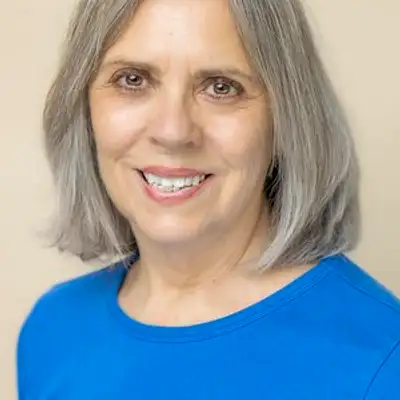

I was introduced to Bill Tucker.
Josie Dalton:My entrepreneurship professors introduced me to Bill Tucker.
Joe Vallo:I got connected with Bill Tucker.
Ruth Anne Wolf:I started taking classes. Bill Tucker was teaching on social enterprise. One of the former executive directors of Flywheel.
Joe Vallo:Used to be the executive director of Flywheel.
Josie Dalton:I found my way into a internship with Bill my senior year. Bill Tucker was responsible for building out much of the programming that we see active today.
Jenny Powell:Bill Tucker said, let's have coffee, and we had coffee. And he said, just try it, Flywheel. And I'm like, I don't know, Bill. He's like, you'll be able to help these folks.
Joe Vallo:He says, hey. You wanna be a coach? And I said, well, that sounds like fun. Let's give it a shot.
Donna Zaring:Philanthropreneur® has a registered trademark. It was Bill Tucker was the creative mind that came up with it.
Joan Kaup:There's been so much reference to Bill.
Donna Zaring:Bill.
Jenny Powell:Bill.
Paul Szydlowski:Bill.
Josie Dalton:Bill.
Joan Kaup:And so many people tell their stories, they give a shout out to Bill who helped him with this or helped him with that. But the audience doesn't get to meet Bill until the end of our season.
Bill Tucker:I feel a little bit larger than life. That's not usually how I feel.
Joan Kaup:Flywheel Social Enterprise Hub launched in 2011. Its purpose? To become an innovative social enterprise hub like no other in The United States. Flywheel has mined hundreds of best practices in the nonprofit and for profit sectors. That's helped identify the characteristics most essential to a social enterprise becoming successful and sustainable.
Joan Kaup:Hello. I'm Joan Kaup, host of On the Fly!, the podcast where we talk with founders, coaches, subject matter experts, and investors. During many of these conversations, you've heard our guests refer to Bill Tucker. What they've learned from Bill, how Bill got them more engaged with social impact. Bill, Bill, who is Bill?
Joan Kaup:Well, good news. Today, you get to meet Bill Tucker. First, let me tell you a little bit about Bill. Bill earned a BA in marketing from Texas Tech University and is an alumnus of the Kellogg School of Management's Advanced Executive Program. Bill is a former executive in the commercial printing business where he held a variety of leadership positions at R. R. Donnelly. He transferred his talents to the social enterprise sector in 2011 when he joined Flywheel, and subsequently became their executive director. Under his leadership, Flywheel became part of Cincinnati's entrepreneurial ecosystem, bringing resources to the social enterprise sectors that are typically reserved for high growth technology start ups. Today is special because today, Bill is with us to speak for himself.
Joan Kaup:I'm talking with the man who launched careers, dreams, businesses, and community economic impact when he steered the driving forces of Flywheel's social enterprise hub.
Bill Tucker:Thank you, Joan. Well, I'm glad to be here.
Joan Kaup:We're delighted to have you. So let's just go right to the very beginning and tell us how Flywheel all got started, what were you thinking, and, run through some of those early years for us.
Bill Tucker:So, back in around 2005, 2006, this notion of creating businesses that were both for purpose and profit, particularly in the nonprofit sector, became really popular. And it was in 2006 that a professor in the entrepreneurship department at Miami University launched the Miami University Center for Social Entrepreneurship, and that kind of kick started more research and things like that. That really led to a number of different initiatives. The Health Foundation, which is now Interact for Health, issued an RFP to bring social enterprises together. They ended up contracting with a company called Community Wealth Ventures that launched the first cohort in 2008.
Bill Tucker:And in 2010, funders in the community, Hale Foundation being one of the majors there, United Way, released an RFP with the concept of creating a social enterprise hub, and it was through that experience that Flywheel basically won the RFP and became formed. And it was formed as a collaborative effort. At the time, the four partners who pulled this all together were Brett Smith from Miami University, included Andy McCraner, who at the time was with Executive Service Corps, which is now part of Resource for Nonprofit Leadership. Additionally, there was the Leadership Council for Nonprofits, and then Suzanne Smith, who was both at the Leadership Council, and she also was, involved with Community Wealth Ventures, and Andy Park, who was center consulting. So those four partners came together and formed up this organization. So that's how it all began.
Joan Kaup:Well, you make it sound like there was a pent up demand for it that, you know, you answered an RFP. But in the early years, was it easy? I mean, were people readily understanding what you were trying to accomplish? Or did you have a lot of explaining to do?
Bill Tucker:Well, think in terms of conceptually, there was a lot of demand. If you you think about it in the nonprofit sector, particularly during the economic downturn that took place in 2008, 2009 during that time frame, there was a lot of pressure on nonprofits because their traditional funding sources were drying up, or at least they were being reduced, and so they were looking for ways to generate revenue that would support them. And so the idea of creating a business in the context of a nonprofit that generated both revenue and margin, if you will, and still delivered on services, the same type of services that they were already delivering, caught on really big time. And so so yes, there was very much a pent up demand, and part of Flywheel's business model was that and how we engage with the community was we worked with nonprofits in the community doing pro bono consulting. So what we did is we helped them understand how to do a feasibility assessment, how to do a business plan, and how to really try to launch those businesses.
Bill Tucker:And this was all pro bono. What transpired over time was that in order to support Flywheel, in addition to the grants that we received, there was also a consulting practice that we ran, and the consulting practice was really built to support those nonprofits who needed more than just pro bono workshops and training programs and things like that. They really needed some assistance to dig in and do very intensive financial modeling, to do feasibility assessment where we're doing both primary and secondary research, And so that's really how Flywheel got its start was doing that. And then I became executive director in 2014.
Joan Kaup:When you were starting that and doing that consulting and helping nonprofits get stronger and better, were you doing all of that yourself or did you already have coaches?
Bill Tucker:No. We were actually, we were consultants. We were paid consultants. So I was one of, I'd say, four paid consultants. One of the folks that joined me at that same time was Gail Hillicky, who to this day still is involved in nonprofit consulting. But yeah, we were paid consultants, and therein lay what became the challenge with the business model, and that all that pro bono work that we were doing, we were doing that with paid consultants.
Bill Tucker:So every time we did something in the community that, you know, that's benefiting the larger community, it required us to pay those folks, And so which is great, I mean, that's great for the consultants, but the upshot of it was is we had to generate enough margin to pay for that, plus to pay just the natural, normal operations of any nonprofit, particularly a small nonprofit. So that's where that came into play.
Joan Kaup:Right. So at that time, you are a startup. I mean, Flywheel is all about working with emerging startups. You really were this startup.
Bill Tucker:Oh, I don't think there's any doubt about, you know, Flywheel as having been or still probably is a startup. Because over the course of the years, the market changed, and I say the market changed, first of all, with nonprofits. So a point at which for nonprofits, nonprofits that could afford the consulting services that we were providing, we pretty well tapped that market, and there weren't a whole lot of them left. Secondly, I guess you'd say the capacity of the ecosystem to absorb these social ventures was waning. At the time, Social Venture Partners was being formed, and Social Venture Partners also had an approach to support nonprofits that wanted to build revenue based businesses.
Bill Tucker:So the market was getting more complex. And so that's really when I became executive director in 2014, our business model was broken. We weren't generating enough margin to support the good pro bono stuff that we were doing that was highly valued in the community, and at the same time, that restricted our ability to deliver really meaningful support and meaningful services to the community. That was about the time that the startup economy, startup ecosystem was really scaling up. It started in 2008, but became very prominent in 2014, 2015 as this hub, very much like Flywheel, a hub for entrepreneurship in this community was formed largely around an organization called Centrifuge.
Bill Tucker:And so that's where the business model for Flywheel really needed to change, or I saw an opportunity for change, and I can talk more about that.
Joan Kaup:Yeah. Tell us. Because any small business, any start up organization has to be flexible and has to grow and evolve, and Flywheel certainly did. I mean, the programs that we have today were not the same programs that were there in 2011/2014. So during your years, how did things evolve?
Joan Kaup:So any business, any startup or growing business needs really three things to make them successful. They need access to talent, so smart people that can help accelerate the growth of the business. They need access to customers. They need to have people that are going to buy their services, and they need access to capital. And those are the kind of three building blocks. And it doesn't matter whether you're building a tech product or whether you're building a social venture, or even building a mainstream business. All startup growing businesses need those three things. And so from my perspective, as I started becoming more involved in the startup community, what I realized, I realized first of all that, but I also realized that there are loads of people who love the excitement of helping founders find a way, that they had over the years accumulated enough knowledge and enough skills and enough connections that they could be viable from a coaching standpoint to help with that talent piece of it.
Bill Tucker:They also could be helpful with customers because they had experience in customer acquisition and customer retention or things like that. And so that was, I said, well, heck, if they're volunteering to support startup ecosystems, you know, support organizations in this community. Like at the time, The Brandery was an accelerator, Uptech was an accelerator, was running at that time, Ocean was in the process of being formed up, another accelerator program. Why couldn't we invite them into our programming? And so what it allowed us to do was to switch from using paid consultants to deliver the programming, instead use coaches to provide them on a pro bono basis.
Bill Tucker:And it wasn't just to benefit Flywheel, because I think for the folks that get involved with Flywheel, I think there's a deep connection to the relationships they're building and how they are, you know, accelerating the social ventures, the social enterprises, social startups in this community. So it was a it was a you know, it was perfect.
Joan Kaup:Well, I've been one of your coaches for ten years, and you're right. There are some of us who just get excited about it, we just enjoy it, and we're happy to do what we can. So you created an opportunity for a lot of folks, so thank you for that.
Bill Tucker:In a previous question you asked about, you know, how hard was this in trying to teach people about what social enterprise was. In that intervening years between 2013, 2014, and even into 2015. Trying to explain what a social enterprise was was an uphill climb. To deal with the issue of folks not understanding that you could create a business that deliver both on purpose and profit, We did a number of different things. First of all, we held a social enterprise on the square, so we rented Fountain Square, there was a daytime event during the noon hours, we got a lot of traffic there, We had different social entrepreneurs, everything from Saint Vincent de Paul to Free Store Food Bank, you know, we had proclamations from the mayor and city council people, and created some understanding and awareness of that. We did that for two years.
Bill Tucker:The second year, in addition to doing that, we decided to hold an event where we would bring in kind of keynote speakers. So we held an event at Cincinnati Union Terminal and brought in speakers from a number of different organizations, and brought community members into that and did another educational thing. And then the third year, what we did is we rented out the Underground Railroad Freedom Center, and we not only had speakers who talked about their experiences, but we also had a showcase. So we had all the social entrepreneurs showcasing their products. It fabulous was success, but it didn't solve the business model problem. That problem being that in order to support these businesses, have to have a consulting practice that generates enough margin to support you know, the pro bono stuff you do in the community.
Joan Kaup:So Bill, just curiosity here, I've I've been with Flywheel for a long time, but I don't know how how did we ever come up with that name?
Bill Tucker:There's a really good hint. If you take a look at the Flywheel logo, what you'll see on the left hand side is a circular object with gears on it. It's called a flywheel, and for many engines, you know, gasoline, steam, whatever, that flywheel helps retain energy once the motion gets started. So it's hard to get that wheel started at the very beginning. It takes a lot of energy to do that, but once you get it started, just the mass of that flywheel causes it to keep going.
Bill Tucker:And so very much that that lends itself to what Flywheel's role was in this community. It took a lot of people and a lot of money and a lot of time to get this thing off the ground, to get that flywheel turning, took a lot of energy to do that. But once it starts turning, it just takes little shoves here and there to keep it going, and it becomes self sustaining, self perpetuating. You know, that dream of an engine that can run on its own without having any other inputs. Not quite that way, but that's the reason for the logo, yeah.
Joan Kaup:Oh, that's good, and we do the same with the start-ups. It takes a lot of energy to get those–
Bill Tucker:Absolutely.
Joan Kaup:–To get them started. But once you get them started
Bill Tucker:Yeah.
Joan Kaup:You just work to keep them going and growing. So you have worked with so many people that have started companies, coached companies, bought in and supported the whole idea of this. What comes to mind? What are some of your favorite memories? What are the companies that have soared to success and surprised you by doing so?
Joan Kaup:Yeah. Go ahead. You're smiling. Tell me. So so one of
Bill Tucker:the things that I learned over time starts with this notion, a question that I got frequently, which is, who's your most successful startup? Which is a typical question in the technology driven venture capital world, because what you're looking for is those companies that have a hockey stick growth, they get acquired by whomever, and the investors get a big return on their money. And so that's the typical question. And over time, what I began to realize is that we really weren't creating companies, what we were really doing is equipping founders. And if you look at the traditional startup ecosystems, what you'll find is, you know, that you may have out of 10 companies, you'll have one that does really well, you may have a couple that kind of keep things, you know, they do okay, but there's a lot of failures.
Bill Tucker:And what you'll also see is that there are founders within that failure group that go back to start their second venture, and it's successful, or maybe it's marginally successful, and then they go back and create their third venture, and it becomes wildly successful. So from my perspective, it's all about creating founders rather than trying to create companies. That doesn't mean along the way we didn't have some real successes.
Joan Kaup:Well, you make me think, Josie, would laugh and say, you bet on the jockey, not on the horse. Exactly. And that's exactly what you're saying.
Bill Tucker:Yeah. Exactly. When it comes to selecting companies, that's a major selection criteria. The question also begs the answer that, you know, that who's your favorite child? You know, you can't really say who that favorite child is.
Bill Tucker:But there are a couple that came to mind, and it's very kind of contextual. One of them was we were getting ready to close out the applications that day for the first accelerator we ever ran. So what Flywheel did is just like Uptech and Brandery, Ocean, etcetera, we ran an accelerator program over eight to twelve weeks. There was a certain amount of programming, but on top of that, there was a lot of coaching, and the companies received individual coaching teams. And we were getting ready to close out the applications and I got a phone call, and I remember standing out on the patio at Union Hall taking this phone call from Katie– Katie Nuseku, and she was a social worker who had worked with youth, very involved at Hamilton County Child and Family Services, and she decided that the work that she was doing was best done not in that arena, but was by starting something.
Bill Tucker:And, so she and her husband Alobo started what is now called Found Village, and from that one phone call and the coaching that she got and the opportunities that and the skills and opportunities that came from that, Found Village is now, I think, generates $1,200,000, something like that in annual revenue, it's probably more than that now, that's the last report, affected the lives of hundreds of young people who otherwise would have found themselves in the criminal justice system. And so for me, the thing that brings me the most joy is seeing those types of things.
Joan Kaup:That's a huge success story, any way you want to cut it.
Bill Tucker:Sometimes these things come to me just, I had a friend in our building who came by and she said she was taking, had some recycling, she was going to take it to the hub, and I said, Cincinnati, Reuse and Recycling Hub? And she said, yes. And I said, I remember when they participated in the very first sustainability accelerator that we did, and then have grown that into this incredible organization that does really good work in the community. And so it just they randomly these things show up, and it's just fun talking to those folks and finding out where they are.
Joan Kaup:It is fun. And it it is fun, over the years to see things come in the newspaper or flash through, one of your screens, and you go, oh, yeah. That's one of the Flywheel kids. Or, oh, yeah. I remember that.
Joan Kaup:That's one of ours. So there's a lot of satisfaction in that. Thank you for all of that. Before I I jump off of Flywheel, is there is there a common theme? Is there any advice based on that that you would give a listener who's thinking about starting an emerging social impact enterprise?
Bill Tucker:Well, there's a long list of things. And I think that that's what Flywheel skill is. There's really nobody in this community that is as uniquely qualified to be able to coach those founders who are purpose driven, but yet they want to make a profit in doing that, whether it's regardless of how they're organized, is it for profit or nonprofit, it doesn't matter, everybody's got to make a profit, otherwise the bills don't get paid, and then certainly the founders need to get paid as well. So the common you know, there's just a lot of things that that Flywheel does uniquely, in terms of coaching those founders, But I think one of the things that is most challenging for any founder, and maybe more so in the social entrepreneurship space, is that if you are a solo founder, that is you're doing this business all by yourself, it's really, really hard to have an objective view of your business and to know when you need to quit, or when you need to pivot, or when you need to accelerate. And so the advice that I would give any founder, and particularly in the social entrepreneurship space, is don't go it alone.
Bill Tucker:Now the practical side of that is when you're starting something by yourself, you don't have money to pay anybody. But one of the things you can do, if you've got people that are passionate about the work that you're doing, create an advisory board, folks that you can count on a regular basis to help give that consistent advice. And once again, that kind of reflects the Flywheel business model, which is to coach and have these coaches that stay with that founder during the course of the accelerator, and in many cases, for years beyond That's true. To help support those founders. So don't be a solo founder, and if you have to be a solo founder, make sure you've got a good group of of coaches that stick with you as advisers or board members or whatever.
Joan Kaup:Since Flywheel launched, and you got things all stirred up, thank you very much, we have worked with nearly 190 entrepreneurs.
Bill Tucker:Wow.
Joan Kaup:That's a big number. Is it? So the impact is growing. And what they do and the people they influence and, you know, the ripple effect is pretty remarkable. So thank you for that.
Joan Kaup:Flywheel Enterprises impact workforce, community development, youth and children, the environment, behavior, and health. They empower women and tackle hunger. So we know that there is impact in the region, and you continue to work in this landscape, how do you see the impact? How do you talk about it?
Bill Tucker:First of all, I should say that impact is incredibly hard to measure. I sit on the board of an organization, it's just hard to draw that thread from that input or that action that that nonprofit takes all the way through the outputs and the outcomes to get to an impact measurement. So it's really hard to do that, and that's well known in the nonprofit world. What you can do a little bit better is measure outcomes, and to some degree, when you talk about 170 founders, that is to a degree an outcomes measurement, it's certainly an outputs measurement for sure, And I think that most of the measurement of outcomes really becomes anecdotal. And it's a little bit like the story I told about the Cincinnati Reuse and Recycling Hub, where you all of a sudden, you find out that this organization that you helps help support is now doing great things in the community. It's real and once again, it really evolves around the the individual more so than the company.
Joan Kaup:Well, you're very humble, because you've had a really big impact regardless of if you want to own up to or how you want to measure it. So thank you for that. So tell us just real quickly, you're still very much involved in entrepreneurship. What are you doing now?
Bill Tucker:So one of the things that I have enjoyed most in my, I started to say second act, but this is my third or I fourth act–
Joan Kaup:I think so.
Bill Tucker:Is that as you go through a lifetime, I look at my lifetime in terms of kind of three phases. One is the maturation phase, where you learn how to work in the world and talk to people and how to motivate people or how to provide leadership or whatever that may be. And then the second phase is very much about accumulation, and that's accumulation, to some degree, it's accumulation of financial resources, but to a large degree, it's accumulation of knowledge. And then the third part of my life at least has been around how I take that accumulated knowledge and how I turn that into wisdom that can be shared. And a big piece of that is understanding how to build networks.
Bill Tucker:A big piece of it is understanding how to connect and step out of the way. And so for me, that's an incredibly invigorating opportunity. I met somebody who is from Northern Spain. I'd happened to be in Spain, so I knew a little bit about the region, but in the course of ten minutes, I introduced him to two other people who could have a substantive impact on his life as he considered his next opportunity as a resource in the startup ecosystem. And so to be able to do that brings me a lot of energy, and it brings me a lot of joy.
Bill Tucker:So when Miami University came calling, said, hey, we could use some help connecting our alumni with the programs of the Miami Entrepreneurship Department, making sure that we have those alumni who are interested to get connected to the university. I said, okay, I'll do it. But, what I found over the course of the last year and a half is the skills that I'm exercising right now are the same skills I acquired over that lifetime. The knowledge that I'm sharing, I'll call it wisdom, is the same wisdom I shared at Flywheel. That's what kind of energizes me.
Bill Tucker:I wanna give you one example about another startup founder that went through Flywheel. Her name was, Nicole Armstrong. She runs a company called Eloquaite. And so and I actually said on her advisory board, so full disclosure, I do that. Nicole has done a lot with this, what started as a very small startup, had tremendous impact in this community and outside this community, but it's just been fun to watch her.
Bill Tucker:During my time at Flywheel, we recruited, hired a number of students starting as interns. We have one that we hired as an employee with Josie Dalton, and so I had an opportunity to work with those interns, and one of those interns' name was Gabby, and never met her because she worked for us during COVID, never met her in person, and then I was in New York for something that Miami does called Wall Street Week, and she showed up at this event. It was the first time I had met her, and she's working for, I think she's working for Body Armor, at least she was at the time, so doing some really incredible work there. About the same time, another one of our interns was a guy by the name of Connor Paton. Connor had a choice when he graduated, either take a job teaching English as a second language in Thailand, or doing this startup that he had birthed while he was at Miami.
Bill Tucker:He chose the latter, and so I see him almost every day at Union Hall because he's housed there, he's hiring staff there, he's received all kinds of venture funding, it's just fun to see those relationships that you develop, the skills and wisdom, knowledge that you share, see that come to life in somebody else who's going to carry on the mission, going to carry on the work, whether it be in social impact or wherever it may be, so that's why I did that.
Joan Kaup:Well, we so appreciate you taking the time to share your stories and your advice and your wisdom and your memories. Is there anything else you wanna give to our listeners before we leave the microphones?
Bill Tucker:Yes. You know, and I think it largely revolves around how you as a listener, know, if you are, let's say if you're a founder, there's no better place to start in a social venture than with Flywheel. Flywheel's not alone in that case, Social Venture Partners is another good organization, but reach out to these organizations and get good input from them. But I also say that if if if your place in the world is that, you know, you really want to give back, there's two ways you can give back. You can give back with your time and talent, or you can give back with your treasure.
Bill Tucker:And so obviously, being a coach at Flywheel is a great way to give back that time and talent. But when it comes to treasure, I want to leave those folks with this thought, and that is I can take a dollar and I can give it to any nonprofit agency, and that dollar flows through and allows that nonprofit to execute on its program. Where Flywheel is unique is that the dollars that Flywheel receives, those dollars go in support of programs that support these entrepreneurs that are building businesses and continuing the impact. And so in effect, a dollar given, it's just a straight donation, is a dollar in and it's a dollar out. But at Flywheel, that dollar end can be multiple dollars out.
Bill Tucker:And one of the programs we ran with some of our major gift donors allowed them to to donate to Flywheel and then take those dollars and see those dollars recirculated in the ecosystem. My advice, I guess, could say is if you're an investor, you've got some dollars that you could probably invest or you could probably give to a nonprofit, but I suggest taking a kind of an investment approach and giving those dollars to Flywheel, particularly from your donor advised fund. It's a great tool for doing that. That's my––
Joan Kaup:You certainly know. So Bill, on behalf of all the founders, the coaches, and all the folks who've had the joy of working with you over the years, thank you so very much for all that you do.
Bill Tucker:You're welcome, Joan. Thank you.
Joan Kaup:On the Fly! is produced by Joey Scarillo with music composed by Ben Hammer. Recorded at 1819 Innovation Hub in Cincinnati, Ohio, courtesy of the University of Cincinnati.