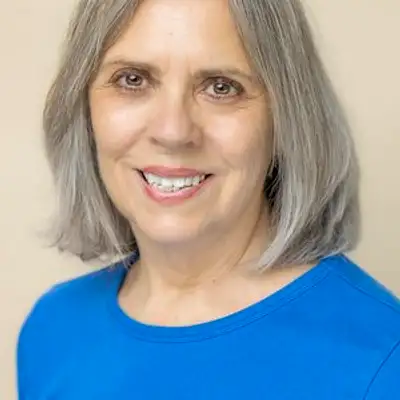

Hello, I'm Donna Zaring, Executive Director of Flywheel Social Enterprise Hub. And today it is my pleasure to be in conversation with Jenna Nicholas. Many of our listeners already are familiar with Jenna's work, movement and books and all of you will be happy to get to know her more today. Jenna is a founder and a serial entrepreneur. She is president of Lightpost Capital and investment and acquisition firm.
Donna Zaring:She is the CEO of Impact Experience, an organization focused on initiatives addressing equity across climate, healthcare, and education. She founded Phoenix Global Impact, a firm specializing in social impact investing and strategic philanthropy. Jenna is also a funder. Previously, Jenna was an investment partner in One Planet VC where she invested in transformative early stage businesses. Currently, she serves as Vice President of Stanford Angels and Entrepreneurs, a community of more than 1,500 investors and entrepreneurs.
Donna Zaring:We are delighted that Jenna stepped away from all of these responsibilities to share some time with us. Thank you, Jenna, for joining me at On The Fly!
Jenna Nicholas:Thank you so much for the opportunity. It's great to be here.
Donna Zaring:Great to see you again. Jenna, would you share with us your personal journey? I just read your book and I'm just fascinated by all the things that you've accomplished so far in your career. How did you get where you are now? You hold an MBA from Stanford, a BA in international relations, and you've studied in Oxford.
Donna Zaring:You've been recognized as a Forbes 30 Under 30 social entrepreneur. How did you start all of this?
Jenna Nicholas:Thank you. And thank you for the opportunity to be here. I'm really excited for the conversation. So I grew up in London. I was raised by my mother and grandmother, and I grew up as part of the Baha'i community and was exposed to the idea from a young age around how do we use the limited amount of time that we're in this world to try to contribute towards social and environmental impact in some way or another.
Jenna Nicholas:And so that was a big part of the through line for me throughout much of my journey in life. And I came out to The US, as you mentioned, I did my undergrad and MBA at Stanford and lived in DC and China for a while. My whole career has been in the area of social responsible investing. Really, how do we blend financial revenue producing models with also social and environmental impact? And I had a chance to work with one of the pioneers in the area of social responsible investing, the Calvert funds, and helped to build a coalition of 170 foundations, about $50,000,000,000 in assets under management to shift capital from fossil fuels into new economy solutions and did some work with the World Bank Treasury with their green bonds team.
Jenna Nicholas:Coming out of business school, started an organization called Impact Experience, where we do a lot of work bridge building between investors and entrepreneurs and communities that have been overlooked and underestimated. And as you mentioned, did some work with One Planet Group to lead their investments and acquisitions and currently lead a firm called Lightpost Capital, where we do early stage investing and lower middle market M and A, all with an impact lens and really applying a lot of the insights from this book I recently published that you referenced, Enlightened Bottom Line, that's all looking at the intersection of purpose and spirituality and business and investing.
Donna Zaring:That's amazing. I'm so impressed with the incredible organizations that you've worked with and some of the institutions you've spent time with in your educational years. Was there something that specifically inspired you or excited you about this space? I mean, me, I've spent thirty years doing corporate innovation work and there was one particular company I worked with that was based in Japan that really opened my eyes. So what can be done if you think about profit and purpose together?
Donna Zaring:That was a life changing experience for me. Was there something in your life that sparked your interest about why this has so much potential and why it's important?
Jenna Nicholas:I had a few moments, but one that comes to mind is she was during my first year at Stanford, I had the opportunity to hear from some incredible entrepreneurs, Mohammed Yunus and Bill Drayton from Ashoka. And I remember leaving the session and being so inspired. And I called my mom in London. I want to be a social entrepreneur. And she's like, what is that?
Jenna Nicholas:I was like, I don't know, but that's what I want to do. And that was definitely this sort of catalytic moment of I think previously growing up, I thought maybe I would go into human rights law or something certainly with a social impact orientation. But the idea of integrating that with business was a much newer concept to me. And this became a line of inquiry and really directed a lot of my explorations and journeying and getting to know other people that were working in the space and just became more and more inspired by how do we blend these elements together and recognizing a lot of the challenges in doing so, but that being a worthy endeavor to dedicate time and energy towards.
Donna Zaring:Tell me a little bit about your spiritual journey. I know that your faith is a big part of your, especially your more recent explorations into this space. At what point did that become a part of the picture?
Jenna Nicholas:Yeah, so growing up, I had a chance to take part in a program called Transformation for Peace. And it was with young people from all around the world. And it was all about reflecting on our place in the world. And it was inspired by the Baha'i teachings. And one of the core ideas in the Baha'i faith is the idea that underlying spiritual teachings of all religions are the same and the power of putting one's faith into action and kind of contributing towards social and economic development and just exposed to many of these concepts and ideas and meeting some of the other people taking part in this course just really set this light on fire around this potential of living a life sort of grounded in this deeper sense of purpose and meaning.
Jenna Nicholas:Some of the other concepts in the Baha'i writings around the equality of men and women and the harmony of science and religion and the power of consultation. And a lot of these principles are principles that have definitely been a big part of the decision making process for how I engage in much of the work that I'm working on. And I think seeing so many of the people that I would have conversations with where they would share something to the extent of I don't really feel like I can talk about it, but and then they would share just how important some of these transformational moments were in their lives and the power of purpose and meaning and spirituality as an orientation. And so that was a big part of the impetus for saying, what would it look like to actually bring some of these stories together in a book? And how might that be also supportive to other people on their journeys as well?
Donna Zaring:It's interesting. When I talk to people about this intersection of profit and purpose, I get a lot of questions, right? And a lot of people ask things like, how can you make money but at the same time create community and social impact? And sometimes those two ideas, especially recently, I think people have been having a hard time putting those two concepts together. What are some of the myths that you hear a lot when you're talking about this space and impact investing and what are some of the things that people have a hard time letting go of in terms of their existing beliefs?
Jenna Nicholas:I think that's definitely a really important one is this preconceived notion that there has to be a trade off between financial returns and social and environmental impact. And that's actually a big part of what I try to demystify in the book is sharing examples of companies that have really generated strong financial returns and also had impressive social and environmental impact. And we need to name a couple that we've had a chance to invest in. One is an amazing company called Asusu that supports people on the pathway towards homeownership and really incredible company and really very much a translation of a lot of the personal experiences of the founding team into building the company. And they recently raised around at a $1,200,000,000 valuation or companies like Devoted Health that are doing amazing work in the healthcare space that raised around at a $13,000,000,000 valuation.
Jenna Nicholas:So I think being able to have these case studies of companies that are really demonstrating that there doesn't have to be a trade off. And of course, there is also an importance of types of capital that aren't always looking at generating market based returns and to have more sort of building a market in different economies, but realizing that there are really great companies that really show that this collinearity is possible.
Donna Zaring:Yeah, sometimes when I talk about sustainability with people that are curious about this space, a lot of times, will remind people that sustainability is not just about the environment, but it's about the infrastructure of a company being built around something that can last. And a lot of times those end up being better investments long term if we're thinking about down the road what the work is leading toward. That's great. Yeah, I think some of the examples that you talk about in your book in particular are just so impressive as far as the scale and the reach of some of these efforts and it might surprise people. So let's talk about founders for a little bit.
Donna Zaring:Founders are the heart of everything that Flywheel does. We support individuals that are building enterprises that are for the purpose of making our community and our world better. And so these are obviously driven individuals that are oftentimes coming from a place of personal experience. And there's a lot of challenges for any entrepreneur, but in many ways there's you know a whole other set of challenges for social entrepreneurs. What advice do you have for purpose driven entrepreneurs who are wondering whether or not a new venture that's purpose driven can really make a difference?
Jenna Nicholas:Yeah, I think this is a really important question. And I would also just want to give a big shout out. It was amazing to attend your conference and summit and meet many of the entrepreneurs that have gone through the Flywheel program and meet other investors that you've engaged with. And I think one of the things that really came alive in being there and seeing firsthand was just how valuable it was for the companies to be able to be in community with one another through the Flywheel program. And I think that's something that I see a lot in many of the communities that we work in is exactly that.
Jenna Nicholas:And I think so often for founders, and to your point, I mean, writing a lot of the ups and downs of entrepreneurship, it can be quite a lonely experience and you can feel like, oh, am I the only one that's struggling with hiring or fundraising or identifying the product market fit? But being able to be in community with both other entrepreneurs and founders who are engaging with similar questions and to have that support system and then also to really cultivate mentors in that process and other people that have gone through the process of building businesses or investing in businesses. I do a lot of coaching and advisory work and a huge advocate for the power of coaches as a way of having a space. I've had a coach for much of my adult life of both being able to have that space to be able to really reflect on what are we learning along the way and having that pattern recognition and being able to see is this the pathway that On wants to be on and what are the insights that are coming from conversations with different investors and customers. And so I think all of those elements are going to be really helpful in the process to build out companies over time.
Donna Zaring:So plugging into a network of other founders that are interested in this work. Yeah. What's really cool is when we do our cohorts, Flywheel, and I would imagine a lot of accelerators who work with social entrepreneurs experience this, but we see that there's a lot of friendships created in those cohorts. And sometimes there's partnerships born when founders meet other founders and they're tackling similar issues and they find a lot of synergy and ways to work together. That's one of the interesting outcomes from our cohorts that's always just a little unexpected and exciting for us.
Donna Zaring:But finding that community and with purpose driven entrepreneurship, that's a good community to be in. You talk about in your book the enlightened bottom line. So we talk about the double bottom line a lot, which is that intersection of profit and purpose. You talk about the enlightened bottom line. Tell us a little bit more about that extra layer talked a little bit about your faith.
Donna Zaring:What would you suggest for social entrepreneurs as they think about an enlightened bottom line?
Jenna Nicholas:Yeah, so this is really a frame that emerged. For the book, I interviewed about 65 investors and entrepreneurs around what role the spirituality and purpose and meaning play for them in their work and lives. And what really emerged from these conversations is what I've been calling the HEAL framework, which stands for hope, empathy, abundance and legacy. And I think that in the process for founders and entrepreneurs who are looking at building businesses and a big part of when I think about the enlightened bottom line, really think about it as embedding these sort of heal framework into decision making processes. And this is a lot of what through our work with Lightpost Capital and engaging with founders is really engaging with them around some of these elements and just taking them briefly one by one with hope.
Jenna Nicholas:I think a lot about in the world right now, and we have this concept in the high writings around the forces of disintegration and integration in the world. And I think so much of what we're seeing on a daily basis in the media and all around us, right, these forces of disintegration and so actively orienting towards where these sources of integration are. And I think to our previous conversation around the power of community, that being a huge part of where we can become re inspired by the hope and the possibility and in those lower moments to reground and where that hope is. And I think the second element around empathy as a guidepost of what would it look like if we were to engage with one another as if we're part of this interconnected whole. And I talked briefly about the example of Devoted Health earlier.
Jenna Nicholas:Devoted Health has this practice that they have all of their health care providers engage in before they engage with any of their patients, which is to imagine that the patient that they're about to interact with is a beloved family member. And they credit so much of their success as a company to this very simple exercise of imagining that the person they're about to interact with as a beloved family member and what comes about as a result of that. And I think about this third element around A for abundance. You really think about that as interconnected with this idea of enoughness. And how do we kind of come back to this idea that we are enough?
Jenna Nicholas:And so often in running businesses, it can always be what's that next goal? And are we going to secure this next client or this next fundraising pitch? But how do we reground from that place of enoughness and what can come about when we center from that place. And then the last part around L for legacy is really thinking about what are we trying to leave in this world? When I was at business school, I took a class called Lives of Consequence.
Jenna Nicholas:And in the class, they had us write our own obituaries. That process of thinking about and it's kind of an intense exercise, but sort of this thinking at the end in mind of what would we want our closest friends and family to say about us? And is the life that we're living right now leading towards that reality or not? Or think about the indigenous concept around seven generations thinking and what are we inheriting from seven generations in the past? And what is the impact that we're trying to leave for seven generations into the future?
Jenna Nicholas:And how does that guide our decisions and actions today?
Donna Zaring:Oh, my gosh. I love that. The HEAL framework. In your book, we talk a lot about investors. We talk a lot about entrepreneurs.
Donna Zaring:I want to talk for just a second about institutions and corporations and how might they embrace the HEAL framework? So I think they're facing a lot of challenges that are know pressuring against earnings reports and different financial pressures, how might they think about bringing an abundance mindset and entrepreneurship into their organizations right now?
Jenna Nicholas:Yeah, I think one of the things that's really powerful and I talk about some of these examples in the book is how companies operationalize some of these principles. I think about a company called Innisfree Hotels, and they've gone about the process of creating what they call a cultural manual. And it's basically a set of their principles, I think many of which are aligned with the HEAL framework, their principles, which they usually use as a guidepost for their decision making. And so as they are hiring and onboarding and engaging both with their internal employees, but also with the customers that they work with and their broader stakeholders in the communities that they engage in, this becomes a framework that they can come back to in that decision making process. It's everything from the power of consultation and the power of check ins and no power plays and some of these elements that really take what can sometimes be quite abstract and then really make it quite concrete within organizations.
Jenna Nicholas:Also at the end of each chapter in the book, a set of questions for people to reflect on. One of the things that's been really interesting in hearing stories from people who have read the book is that they've been really using this as a tool within their organizations to have these conversations around operationalizing some of these principles within their particular context. Of course, every context is different. But the power of being able to create the space to even have the conversation and see what are people seeing given their different vantage points and what are they learning that can then help to inform the decision making of moving forward. And so I think coming back to also this power of being in community is also being able to engage with other institutions and organizations that are thinking about some of these same questions.
Jenna Nicholas:As people are learning along the way, they can then have that feedback loop and support system of others in that journey as well.
Donna Zaring:Fantastic. So if I'm an entrepreneur right now and I'm thinking about building something that an institution like you just described who might be more interested in working with someone like me, or perhaps I am going to go seek funding from an investor, an impact investor who might be interested in helping me scale and grow. What are the kinds of things that those institutions or funders are looking for from a social entrepreneur? Like not just that I wanna do well, but what other kinds of things do I need to demonstrate to those customers, investors?
Jenna Nicholas:I think some of the elements that I really see consistently across different organizations is how are people translating the personal experiences that they've had into their lives? And what is that track record that they're then channeling into building out the business that really provides this unique value add that increases the likelihood of success? So whether that is having built a similar company in another area previously, or whether it is other work experience or life experience that provides that kind of competitive edge. And I think some of the other elements are around what is the language often uses, the total addressable market. How big is the market that this company is going after?
Jenna Nicholas:And what are other companies that are in the industry and what's been their success? And what are the insights and lessons learned from some of those other businesses that are being applied within the build out of this particular company and what's the unique value add of that. So being able to really present the case for exactly as you say, both how is this going to work from a social and environmental impact perspective, but also how is it going to generate strong financial returns? And really, how do those two reinforce one another? And what is the feedback from customers around that?
Jenna Nicholas:And how is this really solving a real challenge that people have?
Donna Zaring:It's interesting when you talk a bit, we talk about betting on the jockey and not the horse a lot, kind of, and I've worked at a couple of venture capital firms and different groups supporting entrepreneurs. And it's funny that that was the first thing that you brought up was somebody who's got demonstrated experience or just some sort of track record of really knowing how to build and scale things. I would say that that is another crucial element of being a part of a really good ecosystem and finding an ecosystem because we see this all the time as really motivated, smart, technical people that want that are building something that has a high potential to change lives but don't necessarily have that startup builder mentality and there are others that we encounter that do have that kind of serial entrepreneur mindset but don't necessarily have the technical aptitude And so it just goes back to what you're originally saying, which is find your people. Like most people are not good at everything. Investors really want to see that complete picture impact investors in particular really want to see that you're solving for something that is going to be meaningful from a business standpoint but also from an impact standpoint and so it's really crucial to find the right people and build a good team that are going to be able to see that through to the end, whatever that end might be.
Donna Zaring:Hopefully, that's the problem being solved.
Jenna Nicholas:No, exactly. Exactly.
Donna Zaring:Wouldn't that be something, right?
Jenna Nicholas:Yeah.
Donna Zaring:That's incredible. Well, I would be remiss if I didn't invite you to share our listeners how they can learn more about you and your work. I mean, we've talked a lot about your book and I want to give everyone a chance to get more involved with what Jenna Nicholas is working on because there's so many things. How can people listening do that?
Jenna Nicholas:Yes. Thank you for the question. So yes, definitely checking out the book. I also have a Substack where I'm regularly posting content related to many of the themes that we're talking about today. So have a podcast and feel free to reach out on LinkedIn.
Jenna Nicholas:And I think that it's such an important one to continue this dialogue. And as we've been talking about being in community on that conversation, so really look forward to continuing to deepen in that way and excited to continue the journey.
Donna Zaring:Well, we are so happy at Flywheel that we've crossed paths and we were thrilled to have you at our conference in June and the feedback we've gotten from our community has just been really positive. So we're very grateful to you for spending some time in Cincinnati and really inspiring the whole region to think differently about what's possible if we start working together with that abundance mindset to tackle some of these social challenges through entrepreneurship. So thank you so Thank
Jenna Nicholas:you. And thank you for all that you're doing. It was really inspiring to be there and see firsthand just the incredible impact that you've had in the community and to be able to meet some of the people that have been touched by that. Thank you for your doing.
Donna Zaring:Don't stop what you're doing. Keep going. I know you're gonna make the world a better place as long as you keep working and continuing on. From the bottom of my heart, thank you. And from everyone at Flywheel as well.
Joan Kaup:On The Fly is produced by Joan Kaup and Joey Scarillo with support from Gianna DiMona. Music by Ben Hammer. It is recorded at 1819 Innovation Hub courtesy of the University of Cincinnati.