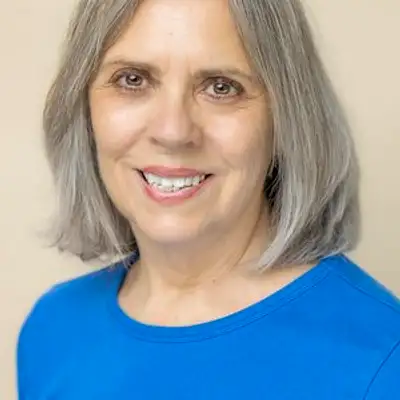

On The Fly! celebrates social enterprises and the people who build them and the organizations that support them. Hello, I'm Donna Zaring. I'm executive director of Flywheel Social Enterprise Hub, and I'm excited to share this time talking with Moira Weir, who's the president and CEO of United Way Greater Cincinnati. Hello. Hello.
Donna Zaring:Thanks for joining us.
Moira Weir:Thanks for having me. It's nice to be here with you.
Donna Zaring:On The Fly! was created to help listeners in the area hear about what social entrepreneurs are building, but also hear from organizations like United Way who've been serving the community for a long time and learn more about the needs that you're focusing on and the different innovative things that you're doing to serve the community as well.
Moira Weir:Yeah, no, thank you. You guys are doing great stuff, so it's an honor to be here.
Donna Zaring:Thanks. And thanks for being a great supporter of Flywheel over the years, too. So, Moira, you've had a long career of helping families and those that are underserved. And for over twenty five years, you worked in the Hamilton County Department of Job and Family Services. Incredible.
Donna Zaring:But then you recently made the move to become president and CEO of United Way Cincinnati. And so what were some of the biggest differences or surprises that you discovered in making that change?
Moira Weir:Yeah, I would say it was a little bit of a journey too because I was, as you mentioned, very deep in community work, which I adore and love. But it was always very crisis oriented and so really it was like how do we solve this issue right now because somebody didn't have a place to sleep tonight, somebody didn't have food or their application for public assistance wasn't going through. So it was like, how do we solve this issue? But we never had the ability and really scope to really think about how are we thinking about changing those conditions so that that doesn't happen again. And it was important work.
Moira Weir:It was great work. But I really started to become curious about, was a child welfare worker initially, and I worked my way up, I was the director for over fourteen years. And I started to see the children that I worked with on my case of becoming young adults and feeling very they didn't have hope and they didn't have aspirations for the future. And I would walk into a home and you could see really three generations of an under resourced family system. And I thought we can do better than that.
Moira Weir:We have such an amazing community and people care so deeply. So when I was approached about the role, it really was, I say it's part of my journey because I was like, that could be the perfect opportunity to really think about how can we not only meet the needs, because those are important. We want to make sure families have stability reducing trauma. But then also, what are we doing to really recreate the systems that hold our families back? So I would say it was a little bit of a pivot and I started 03/16/2020.
Moira Weir:COVID just unfolded. So it was a little bit of a the good news with that, it was helping me transition from crisis oriented to now being more thoughtful and planful. So I had a little bit of a runway there. But I would say what I'm learning in this work, and I think I knew but I'm experiencing it, is that these are not quick fix issues. And it takes persistence, being committed to stay the long course, having the discipline to say, this is where we're going.
Moira Weir:Yes, that sounds good, but if we really want to get to here. And it's always balancing those immediate needs that have to be addressed versus what are we doing to challenge all of us to think differently about the future for our community. And I strongly believe that any individual in our community has the ability, we should support them in their journey to reach their fullest potential. And so I always say don't let your zip code dictate your future. And I feel really passionate about that.
Moira Weir:Whether you're a newborn, a child going through school, or an adult, you always have agency over your outcome. So how do we support that? So it's been a wonderful and it's tough work. I mean, community, changing systems, and I don't mean that unkindly, it just takes a lot of work and it takes a lot of discipline. And people like quick fixes.
Moira Weir:Think our society is very much like, what are we doing? And some of these things are going to take time. It's going to take time to change conditions in some neighborhoods just because of the ecosystem that doesn't exist. But I love the work and it's really gratifying.
Donna Zaring:Oh, it's so wonderful to have you taking the lead in this important role for our community. I mean, I think that the way that you bring that experience from serving those urgent needs and to be able to bring that longer term vision in combination with that is just so special because a lot of times people usually are only really thinking one way or another. And, you know, it's interesting. I you mentioned, you know, everybody having the ability to no matter who you are, right, to affect change and change your own situation. And, you know, one of the things that we do at Flywheel when we work with entrepreneurs is try to help them take their lived experiences and put that together into an enterprise that can then scale, to your point.
Donna Zaring:So move beyond that immediate need and grow and scale to serve the community. And so I think one of the things that we've started doing is really encouraging those entrepreneurs to turn to resources like United Way. When they're coming to attacking a problem from a lived experience, how can they ground that in a more robust set of data and knowledge that's going to help them get investment? Tell me about some of the things that United Way is doing to collect that data. Your research initiatives you've been doing are really robust.
Donna Zaring:Share more with the audience about that.
Moira Weir:Yeah, I mean, think as a practitioner, I like to say that when I was a young worker, I didn't have children, I was going into homes telling people how to parent or how to keep your child safe. It was a really humbling experience because once I became a parent I was like, woah, man, you have a lot to learn. So you're
Donna Zaring:so good that, right?
Moira Weir:I had resources. And so I always say everything we need to do has got to be centered in lived experience and community voice, and I am a firm believer in that. And I believe everything we do at the United Way first comes from what does the community tell us? Because sometimes we have well intentions to think we know how to solve that issue, But when you actually talk to someone, they say, you know, that is an issue, but really what's more pressing is this. I can give an example of something.
Moira Weir:We're doing some work in Rowell Hill, some really deep placed work about educational success. And I go to the principal and say, I want to work with you on absenteeism. And she says, actually, I need you first to concentrate on loss of learning. So she said, love your idea, but this is really more pressing because if I can fix the loss of learning, the absenteeism will improve. But here I had to say, take a step back, Moira.
Moira Weir:Listen to community. So I would say two eleven is a huge asset to this community. For those folks that don't know, anyone can call 211. It's available seven days a week, twenty four hours a day, you get to talk to a live individual who will actually talk to you and answer questions and help you get connected to services that you need. No surprise to you, most of the road calls are around housing, income supports, and utility costs.
Moira Weir:But the reason, that really gives us the pulse of the community. And so we know what's happening right now. And so sometimes we know what's actually happening in a specific zip code because something's happening and that gives us, we'll know sometimes before the news knows, like there's an issue here. And the beauty of that is we can also respond, How are we solving that? And we also look at this data to say, is there a gap in the ecosystem?
Moira Weir:Where do we need to maybe shift resources or lift something up that doesn't exist? I always say we have a plethora of programs. We don't need more programs. Is there a way that we can maybe make sure that we're maximizing everybody's talents and treasures in the community so that we reduce duplication, increase efficiency? And a way that we really did that with data was when folks were looking at their food insecurity with the SNAP benefits, our call volume went 277% because people were scared.
Moira Weir:Like, what's going to happen? So we used to
Donna Zaring:remember I talked to you right around that time and we were talking about some ideas and we said, we'll talk about this later. I mean, that was a real
Moira Weir:It urgent was. And I felt like that's where the power of two eleven really stepped in because not only were we helping people connect them, they're actually we did a heat map of all the pantries in the region. Some are very non traditional, small, small, some big. And we're like, actually there's two in your neighborhood because people don't transportation's an issue. You can walk through these are the hours, these are the kind of items that they have.
Moira Weir:And we were keeping that updated. So the worst thing you do is send somebody to a pantry and their hours are wrong.
Donna Zaring:Because even just getting there can be an issue.
Moira Weir:Yes. So we used the data. And then we saw really a heat map of where are the more concentrated areas. Then we were able to solve things like, we talked to one organization and they said, If I had a larger freezer, I would have more purchasing power to buy more food that I could give away. We're like, We can solve that for you.
Moira Weir:Let's get a larger freezer. So it's a multi pronged approach, but we're always looking at the data. Well, of all, the calls are really important. So how are we taking that information? And if a caller allows us, and we've invested heavily in our technology and our analytics, and they allow us to identify, like make a client file, we then have an information.
Moira Weir:So I can say, Donna, you called us three months ago. How was your housing situation? So we're collecting all this information. Oh, I hear children in the background. Do you have all the resources that you need?
Moira Weir:And that data helps us always look around and think about what are we learning, what do we need to do, how can we as a community think about approaching these needs. So I'm super excited about the work in that area and it's really because we've been able to invest, as you know, the technology. And then how do you scale something? You pilot it. And COVID was our test.
Moira Weir:It really was our incubation. We tested this process and then we scaled it. Amazing. I mean, is such a tremendous resource.
Donna Zaring:For anyone who is curious about, you know, how if they have an idea or something that they want to do, that might be helpful, to the community, that that tremendous resource can take that help you take that from idea to here's something that's really going to be able to direct that impact. I'm just thrilled.
Moira Weir:I have another interesting little tidbit with that too that I think would align with what you're saying. Our platform that we purchased came from LA. So if you recall the LA Fires. Oh yeah. So they were and because we have the same platform they actually reached out to us and said we can't handle the calls.
Moira Weir:Can you help us out? And we said because we had access to their platform. Absolutely. So we were able and they paid us. We were able to have somebody assigned.
Moira Weir:So we were receiving calls from LA helping families navigate housing situations, where to go for shelter. But that we used that really as a test for when the floods happened here. So when the flooding happened, we were like, Okay, we knew how to do this now. So we were proactive. Reached out to FEMA.
Moira Weir:We reached out to the local organizations to say, Let's get prepared so when the calls come, how do we help people find housing? Again, we tested something and
Donna Zaring:then we were able to scale it. Amazing. Know that you all have, United Way has worked very hard to try to identify some primary areas of impact that you believe you can affect the most change. And I believe those are educational success, financial empowerment, and housing stabilization. And you just touched on housing stabilization.
Donna Zaring:So maybe let's talk a little bit more about that. What kinds of things are you seeing in terms of our region's challenges with housing? And what are some of the initiatives that you all are exploring to address this?
Moira Weir:So again, tied closely to two eleven, as I mentioned, highest volume of calls is around housing. And I would say United Way is really focused on the people side of it. Really, what does that mean? We are applauding all of the work that's being done around building stock. That's not our area of expertise.
Moira Weir:So we support that. But what we can do is if somebody is housed, how do we help them keep them in their house? So we work really closely around eviction prevention. So making sure we get a call, let's make sure you have we work closely with legal aid, we look closely with the court system. Let's make sure you have proper representation so when you go to a hearing because if you don't have representation, and this is not anyone's fault, it tends to, if you don't have an attorney there it's most likely going to go to the other side.
Moira Weir:So we just want to make sure people have opportunity, have the appropriate representation. We want to keep them because if you don't have a house we know that children don't go to school, parents don't go to work, it creates instability in the community but it's a lot of trauma for a family. Mean to be evicted and not to have a place to live is intense and we don't want to compound that trauma. So we really want to stabilize and then the next conversation is are you in a home that you can afford long term? Is your income aligned?
Moira Weir:And if not, let's now think about what the next steps are. And really through some of the intervention that we've been able to do from different initiatives that we hope to scale, we're seeing people stay within their homes now twelve months after their initial crisis. So we're showing, okay, some of these proof points are working and then how do we scale that? That's incredible. So it really is about making sure.
Moira Weir:And then on the other side you have perhaps seniors that are living in their home and they can't afford repairs. That could be a barrier. And so sometimes they get enticed by somebody coming in offering cash for this home. So what we're doing is actually let's get you hooked up to some lenders to help you do home repairs so that you can stay in your home and pass that on to your children because guess what? That's the greatest way to create generational wealth.
Moira Weir:To be able to pass a home to the next generation is really critical in terms of being able to collect assets.
Donna Zaring:Wow. And I think right now, housing availability is a huge and affordability is a huge issue nationally Right right now. Now. You're
Moira Weir:no Yes. Different than that community.
Donna Zaring:Yeah. And so it's fantastic that you're looking at these things and yeah, I think eviction prevention, I remember a couple of years ago, Flywheel was a part of the Impact Award with the city of Cincinnati, where we were able to bring together a group of innovators and entrepreneurs to try to address the data issue around what are the primary indicators leading up to somebody eventually being a victim. And it was astounding to me how the cost of serving the community and serving someone who is at risk of being evicted is so much less than the cost of once they're evicted. If you could at least Liz Keating there's actually an episode of On The Fly where Liz Keating talks about this. She was the one city council member at the time that led that project.
Moira Weir:We're actually doing something that we're piloting from Boston and it really is like if you can prevent an eviction, it saves the landlord a tremendous amount of money just to turn it. And so we are actually in our third year of that pilot and hope to then scale it. Right now we're focused on public sector housing, but in Boston they actually moved that to middle market housing. But to your point, it's critical because it costs long term, you're spending less money and it's less trauma.
Donna Zaring:Oh my gosh. And all the other services now that people need access to because of the trauma of that moment. And that's why when you asked about the three areas that we
Moira Weir:were really concentrated on, I mean, as a practitioner, but also the data supports us. And again, we're always looking at the data and taking the voices of community, like what are they telling us and how do we bring both of those to the center of all of our strategies and our work. I would say it's like three legs to a stool. If you don't have housing everything else becomes a little bit wobbly. So we know kids don't go to school.
Moira Weir:One misstep can really put a family spiraling downwards that just is so hard to turn around. So I think that we have to make those three legs really strong and that's
Donna Zaring:why they're so all connected. So housing stabilization, financial empowerment. Tell me a little bit more about
Moira Weir:what so that's you're really doing about, I always like to say it's more than stability. Like how do we really help individuals improve their economic viability as they so choose? People have agency over their life. They're allowed to decide what they want to do. We have two things that I'm really excited about that we are again, one is still testing that we're starting to scale and one we've actually started to scale.
Moira Weir:But the one I'd like to mention first is our Future of Manufacturing Fund, which is an amazing partnership we have with GE. They've invested $1,000,000 in us to help them build out the manufacturing workforce. Huge gap in our region. We know companies need that talent. We know that there are lots of youth in schools that have no idea, so what we're doing is we're in our third year.
Moira Weir:Part of it the first year was exposing over 5,000 youth, mostly youth in under resourced neighborhoods about does this mean to be in manufacturing? It's an economic lifetime employment. How can we get you connected in high school to do an internship, an apprenticeship? We're seeing youth graduate now going into the pipeline making more than their parents made. So it really is about they do job coaching, job readiness, and it's really helping us be competitive as a region.
Moira Weir:And we're getting now other organizations like Procter and Gamble, CV and G coming to us and saying, Hey, let's think about this. And it really is good for our community because we're engaging young people, giving them hope. College isn't for everybody, which is okay, or maybe college isn't right right now, but really getting them engaged in the opportunities for lifetime employment. So that's really important to us. The other thing, and you'll laugh at me when I say it because coming out of tax, April's, you know, everybody doesn't like that for tax season, but our free tax program is one of the few programs that we can offer.
Moira Weir:It's free. It's basically driven by volunteers and some investment from the IRS and the United Way. We know that 20% of the population doesn't fill out their taxes and they're entitled to returns of over like $2,800 So this is for low to medium income families. It's the only thing that's been means tested, meaning it's been proven that if you fill out your taxes and you get like the earned child income credit and you get that return, we are helping you improve your economic mobility. The research supports it.
Moira Weir:So we have families that have maybe come four straight years and now they are overqualified for it. It really is an opportunity to sit down with somebody, do your taxes, you're eligible for this return, and then how do you invest those dollars? Maybe you want to pay off some debt. Maybe you want to open up a child savings account. Maybe you want to think about putting money away for a house.
Moira Weir:I mean it's just, again, giving people power for their financial stability. Last year we saved over $2,000,000 in filing fees. It also keeps people away from some of the not so well intended tax return organizations that take a lot of the money out. And we brought back $11,000,000 in tax returns. And if you think about that, that's purchasing power in our community.
Moira Weir:So it really is a win for everybody. So I love that program. We have really worked hard at scaling it. So every year we're increasing it, and that's another connection to two eleven so when people call we're trying to get information. And it's proven both from the data, the stories.
Moira Weir:I mean we just had a young person, I just met her and she was in a housing domestic violence situation anyway and she hadn't filled out her tax returns for a couple of years just because of certain things and we filled out she got a refund of $9,000
Donna Zaring:That is a lot of money.
Moira Weir:Because of tax credits, you know, but life's It's money on
Donna Zaring:the table.
Moira Weir:Now she can go to an apartment, start to have, you know, take her kids someplace safe. So it really is, an amazing opportunity. So we would encourage anybody that qualifies to seek it out.
Donna Zaring:Where would a listener who would be curious about
Moira Weir:that? Jump onto two eleven, you can see 211, and or you can go to our website. And the power of the free tax prep program, it's 100% volunteers driven, and then we get corporate partnerships to help us do the sites, and we make sure we are in sites, particularly where the need is greatest. And we use our data. It tells
Donna Zaring:That's so important. As I used to work at Fifth Third Bank.
Moira Weir:Yeah, Third Bank is actually a huge partner with us.
Donna Zaring:Perfect. Because this was a while ago, worked there in twenty, maybe ten years ago, but that was a huge issue was trying to figure out how to better serve the community and especially in specific zip codes where people were so vulnerable to some of these kind of more predatory seeming, you know, I mean,
Moira Weir:Yeah, no, it's true.
Donna Zaring:And where
Moira Weir:they're, It's know overwhelming. I mean,
Donna Zaring:it's It's barrier to the dating.
Moira Weir:Know, like just a, like not understanding. Mean, tax code's very complicated. It's so complicated. The thing that volunteers have been doing for like thirty years, like they keep coming back.
Donna Zaring:It's amazing.
Moira Weir:It's so amazing.
Donna Zaring:Isn't that incredible? That is something that inspires me about Flywheel too, is just this idea that I'm one person at Flywheel who really, you know, is essentially just organizing a group of like 40 volunteers that do the, you know, do the business coaching similarly, like to the tax, you know, advice. It's, This community just blows my mind really in terms of what people are willing to give of their time and expertise and knowledge to others
Moira Weir:We create that are lucky. We live in a really generous community. I mean, to your point, I mean, the businesses are generous, the individuals are generous, and people care, which is to me huge that there's heart there. And really smart people helping us solve these problems. And
Donna Zaring:I think a lot about the role of technology and everyone wants to talk about AI right now. I have three kids that are college age. I'm thinking about it a lot. What's really cool about what you're doing with this initiative with two one one is ensuring that that infrastructure of relationships in the community of really being able to listen to people and what they need doesn't get lost. Right?
Donna Zaring:And all the disconnect of technology can do this crazy thing where it really disconnects us from the people in our neighborhoods and communities. I love how you're using technology as a tool to better connect and keep United Way close to the people that it serves.
Moira Weir:And you raised a really good point because similarly we're looking at that and so AI can certainly do the information referral but what it can't do is us following up with the person, Did you get what you needed?
Donna Zaring:Right, or still people.
Moira Weir:What if we did 100% connecting with everything? We're moving in that direction so that we can make sure, Donna, did you get everything that you needed and what more can we do to help you? Because we have a fractured system at times and it doesn't work as well as we would like it to work, so how do we make those improvements?
Donna Zaring:Who are the kinds of groups that you're collaborating with at a regional level to try to focus our priorities?
Moira Weir:Yeah, I mean, I always say none of us can solve these issues alone and I believe strongly in this collective ownership. And I would say, you can't opt out of your community. So no matter where you live, no matter what you do, it's our collective ownership to not only solve the issues but think about the opportunities for everybody. So I sort of get a little challenging and you know, sometimes you might drive to work and you leave your house and you go to work and you might not go through the neighborhood, you know, you just kind of like get focused on it. And we all have our day to day things that are important for sure, but we also have to think about what's happening around us.
Moira Weir:And one of the, again I think one of our superpowers at the United Way is we get to work with a wide range of partners. So we have the corporate partners who are amazing. We need those business leaders to help us lean in. And then we have faith based leaders, we have civic leaders, we have nonprofits that are those well known and non traditional. And I have to tell you, some of these non traditional, they don't have the engine behind them like a big well branded, but they're doing really good work.
Moira Weir:And so how do we elevate that? I like to think we're weaving this awesome piece of fabric and we're bringing all of this different energy, expertise and knowledge and heart and thinking like how do we solve these issues? I really try to challenge us all to think about when you represent an organization I like to think of us as a neutral broker like we want to lean into everybody's expertise and so it's like and I say this with humility like how do we as CEOs put our egos aside and say what's best for the region, what's best for the community? I understand we have to have thriving businesses and things like that. But in certain things like maybe we shouldn't be like sometimes like I'm a complex person, lots of things happening.
Moira Weir:When somebody calls 211, as I mentioned, it's not just housing, it's probably utilities, it's probably childcare. So how do we bring those different sectors together and work cooperatively and have a shared ownership of the outcome? So I talk a lot about that and really about having this really optimistic view that if we really lean in together and lean into everybody's expertise, we can do great things as a region. And I've seen it and I know we will continue to do it.
Donna Zaring:And we feel that. I mean, think just I've noticed that in the last few years is just seeing the way that the conversations are happening and, you know, that collaboration is so important for our region. I think we're all really glad that you're in this role. Thank you. Doing this work because you are such a collaborative person and really understand the importance of of of learning from everyone else's experiences.
Donna Zaring:We're so glad to have you here today. What what other things do you want our listeners to hear about from all over the world, by the way? We're in 25 countries.
Moira Weir:That's amazing. So first of it's an honor. I love this. I feel honored to be in the role that I'm in. I've always felt lucky.
Moira Weir:Again, it's an honor to be here today. You know, I would say the other thing that I'm really excited about what we're doing at the United Way that I would love the community to know is, you know, I really believe strongly that an education is fundamental and it starts with the moment a child is born. So we have really leaned into the Cradle to Queer concept and we're really putting resources to that, bringing together lots of different stakeholders and setting tables both with community and those that are well informed about how do we make sure that when a child is born, regardless of where they live, they have access to affordable, safe childcare. Because we know brain development, you know, of us having children, how important it is to make sure that children feel safe, they have opportunities to learn. We want children to be ready for kindergarten.
Moira Weir:So when they're ready for kindergarten, we know that they will then stay in school and hit their milestones. So it's really about that continuum so that as I mentioned our youth are still in school and they're excited. So we're really embracing the Strive Together motto which is a national motto which we're excited about and I think that's an important thing for our community to make sure that we have all children in school thriving. And we're outside the classroom. We respect teachers.
Moira Weir:We know how to teach. We're just concentrating on the things like housing, economic mobility and things like that to make sure kids succeed.
Donna Zaring:And so that's really the beauty of a local chapter of a larger organization like United Way is we now as a community benefit from all the things that you are aware of nationally that are priorities and methods that can work here as well, which is great. So for everybody listening, for all the social entrepreneurs out there who are creative, believe that they're who say, why not? Why can't we make this better? How can I solve this? How can I create something?
Donna Zaring:Here here you have Moira, CEO of United Way, Greater Cincinnati. And, you know, educational success, financial empowerment, housing stabilization. Those are things that you as entrepreneurs can be thinking about and that you know that our institutions locally are focusing on and building resources around for individuals, but also for entrepreneurs to to be solving.
Moira Weir:Yes.
Donna Zaring:So tap into to these wonderful institutions that are here serving the community. Use the resources that are there for you and work with Flywheel to help build your enterprise into something that hopefully someday will take some of the burden off of off of the organizations that are serving so so many urgent needs. And as Moira has so artfully described, working to change the systems that will hopefully make these things better in the long term. We know you work so hard. Thank you so much.
Donna Zaring:You. It's been such a blessing.
Joan Kaup:On The Fly! Is produced by Joan Kaup and Joey Scarillo with support from Gianna DiMona, music by Ben Hammer. It is recorded at 1819 Innovation Hub courtesy of the University of Cincinnati.